Already printing walls, adding a floor line
You're in the right place — this machine takes your shop off the wall and onto tile, epoxy and event floors.
See what it prints →A horizontal floor printer that prints straight onto the surface you're standing on — tile, epoxy, screed and temporary event flooring. Built for shops expanding beyond walls and for operators printing floors as a business of its own. Tier-1 print heads, production-tested, shipped factory-direct with the software, training and turnkey gear to get you running.
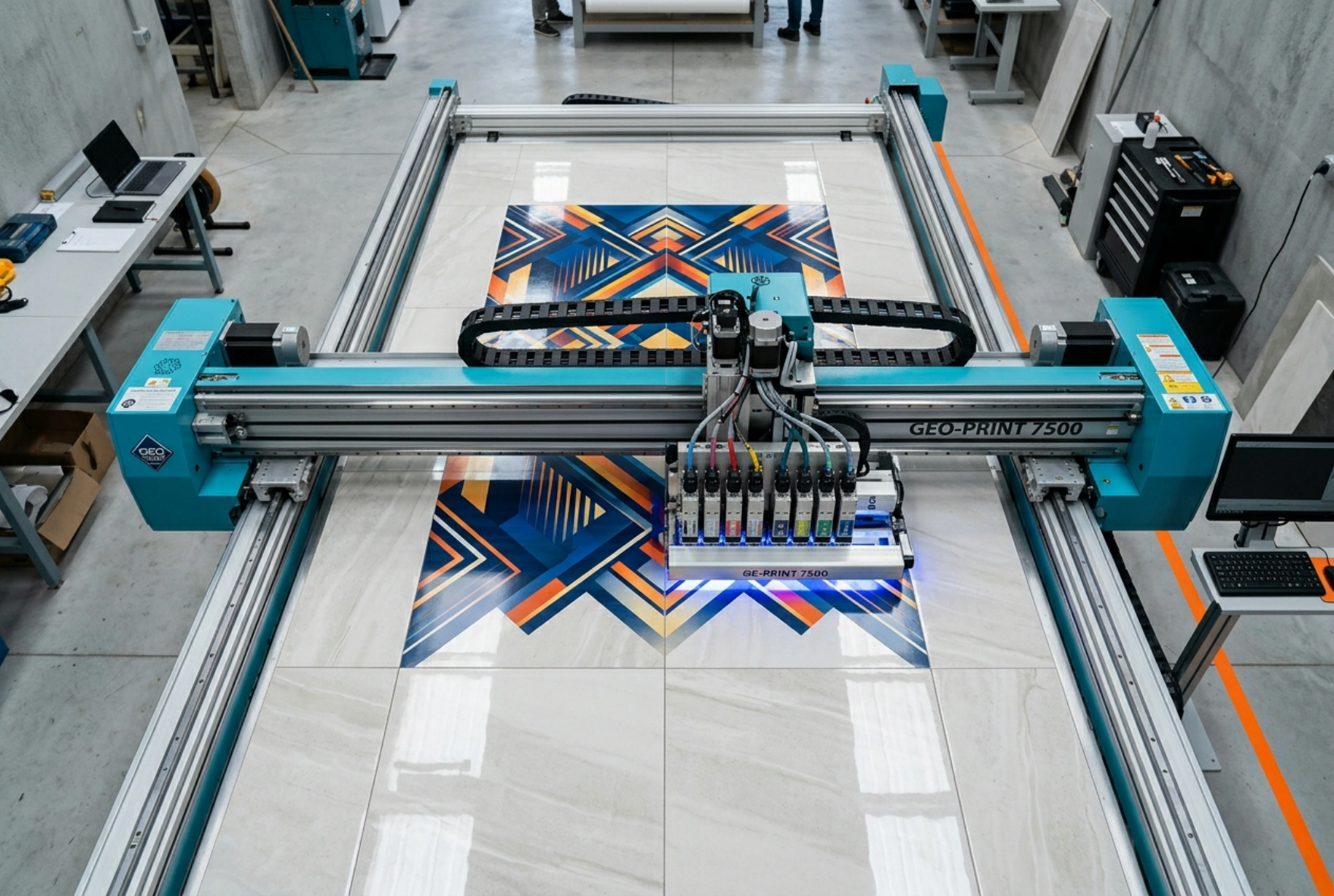
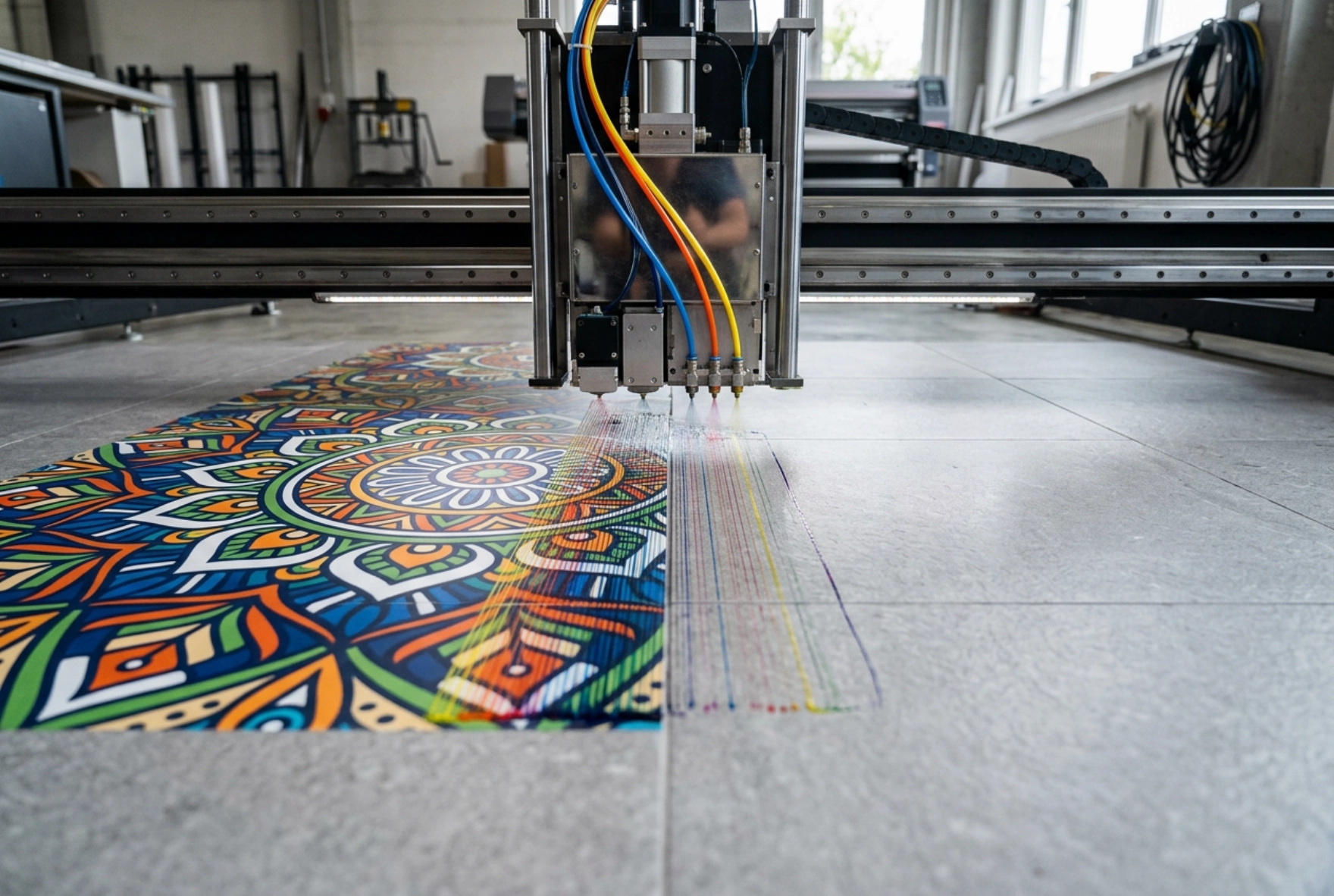
Before the specs, point yourself to the track that matches your situation. This page is about the horizontal floor machine — if that's not the surface you print, these are your shortcuts.
You're in the right place — this machine takes your shop off the wall and onto tile, epoxy and event floors.
See what it prints →For vertical wall and mural work, step to the wall machines instead.
Vertical & wall machines →See the turnkey gear kit and the route to your first paying floor job.
The business route →Batch orders, OEM/ODM and private-label options, dealer terms.
Distributor & OEM →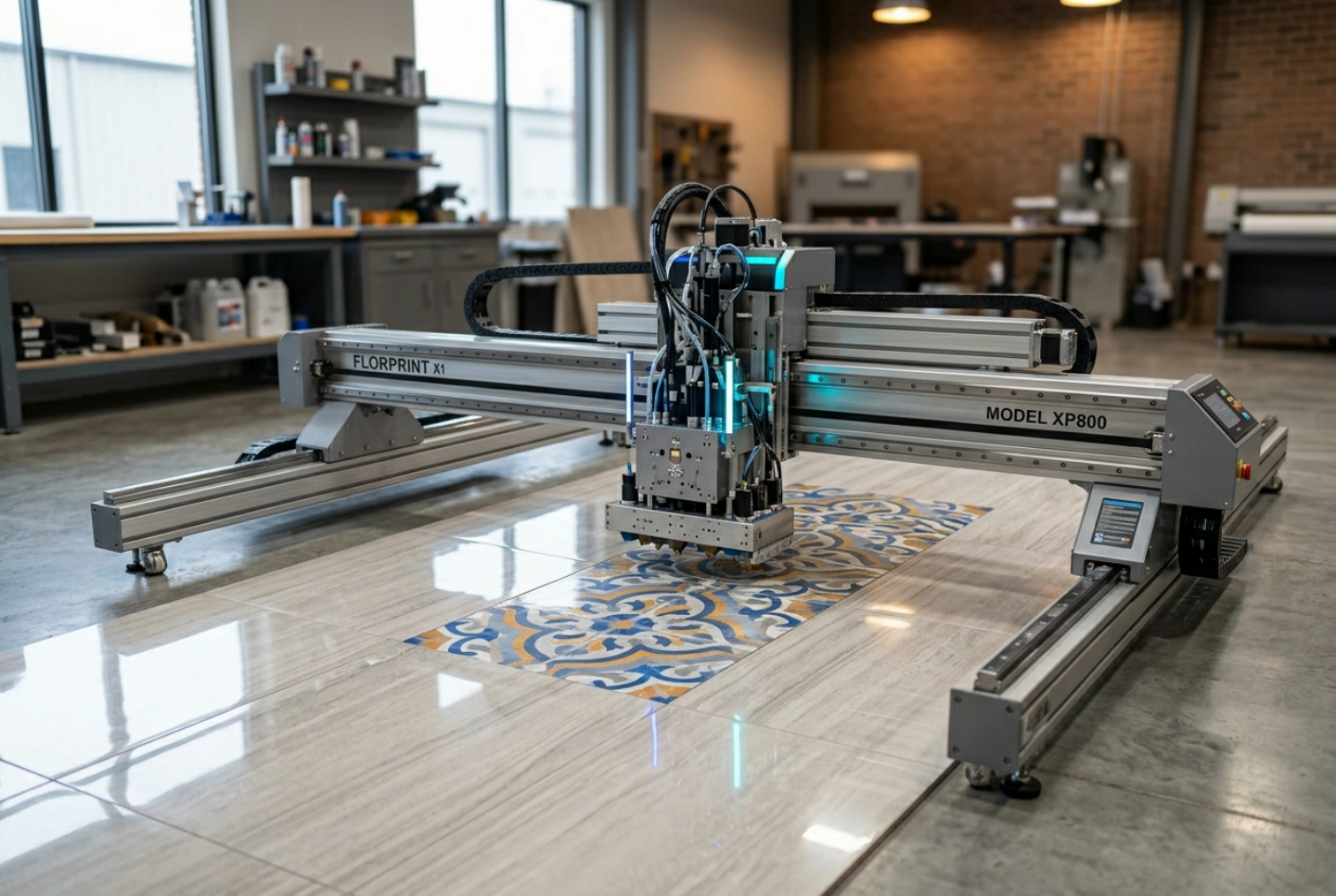
Most printers in our range work a vertical face — a wall. This one turns the print bed 90°. It's the floor machine: the print head faces down, and the surface it prints is the ground under it — tile, epoxy, screed and temporary event flooring. That single change is what lets a shop take its work off the wall and onto the floor.
This is the machine you add when the work moves to the ground. What it prints, how it handles a floor, and where it fits alongside your wall line are all below.
The fastest way to answer "will this print the floors I want?" is to see the surfaces it's built for. This is a horizontal floor printer for tile, epoxy and event flooring — face-down output onto hard and temporary floor surfaces. The work it's aimed at:
Printed patterns and graphics onto floor tile for retail interiors, showrooms, lobbies and residential floors.
Retail · residentialCustom graphics onto epoxy, resin and screed floors for showrooms, studios, commercial spaces and branded interiors.
Commercial · brandedPrinted floor graphics for exhibitions, pop-ups, branded activations and event spaces, on temporary event-flooring surfaces.
Exhibitions · pop-upsWho's buying: flooring and interior contractors adding a print capability, retail and commercial fit-out shops, event and exhibition builders, and existing wall-print operators extending into floor work. Which surfaces suit your jobs, and how the machine handles each, is set out in the spec table below — floor work is surface-dependent, so the fit is confirmed against your material at quote. Going deeper on floor scenarios? See applications.
Most shops that look at a floor printer are already printing something else — walls, signage, décor — and keep turning down or subcontracting floor jobs. The case for adding a floor line, plainly, one point each:
If you print walls or interiors, clients ask about floors too — tiled entrances, epoxy showroom floors, event graphics. A floor machine lets you say yes and keep that work in-house instead of handing it off.
It runs on the same factory-direct, production-tested footing as the rest of the range and prints a plane you weren't serving — you widen what you can quote without rebuilding how you operate.
Buying your floor machine from the same factory that builds your wall machines keeps parts, software and support under one roof — the practical side of running two surfaces.
What the machine actually does with a floor is next. ↓
To keep it clear: this page is the horizontal floor printer. It prints face-down onto floors — tile, epoxy, screed, event flooring. It is not a wall or mural machine, and it doesn't print vertical surfaces. If the surface you want to print is a wall — indoor murals, feature walls, signage, interior décor on a vertical face — that's a different machine, and we build those too.
This is the machine's configuration in plain terms. The full numeric specs are being finalised for this machine and are confirmed against your job at quote — so the figures below are stated as configuration, not as fixed guarantees, and nothing here is read across from another model.
| Spec | Floor Printer (horizontal, cross-surface) |
|---|---|
| Print orientation | Horizontal — prints face-down, onto floor surfaces |
| Surface types | Tile · epoxy · screed · temporary event flooring |
| Print technology | UV-curable ink system |
| Print heads | Tier-1 piezo |
| Resolution | On spec sheet — confirmed at quote |
| Print speed | On spec sheet — confirmed at quote |
| Max print width / media size | On spec sheet — confirmed at quote |
| Power | On spec sheet — confirmed at quote |
| Setup time | On spec sheet — confirmed at quote |
| Machine weight | On spec sheet — confirmed at quote |
| Parts warranty | 24-month |
Full numeric specs — print speed, resolution, maximum media size, power and weight — are being finalised for this machine and are confirmed on the spec pack at quote. We'd rather send you a figure we stand behind against your surface and job than post a number here that doesn't hold.
Printing a floor is a different job from printing a wall, and the machine is built around three things that a floor demands:
Tile, epoxy, screed and temporary event flooring each behave differently underfoot. The machine is set up to move between these floor types rather than being tuned for a single material — the practical side of "cross-surface."
Floor output is only as good as the surface under it, so how each floor is cleaned, keyed or primed matters. The right prep for your specific surface is part of what we confirm with you at quote, not something a generic number on a page can answer.
It ships from the line that builds it with the software, training and turnkey gear to get a floor job printing — the same production-tested footing as the rest of the range, aimed at the floor.
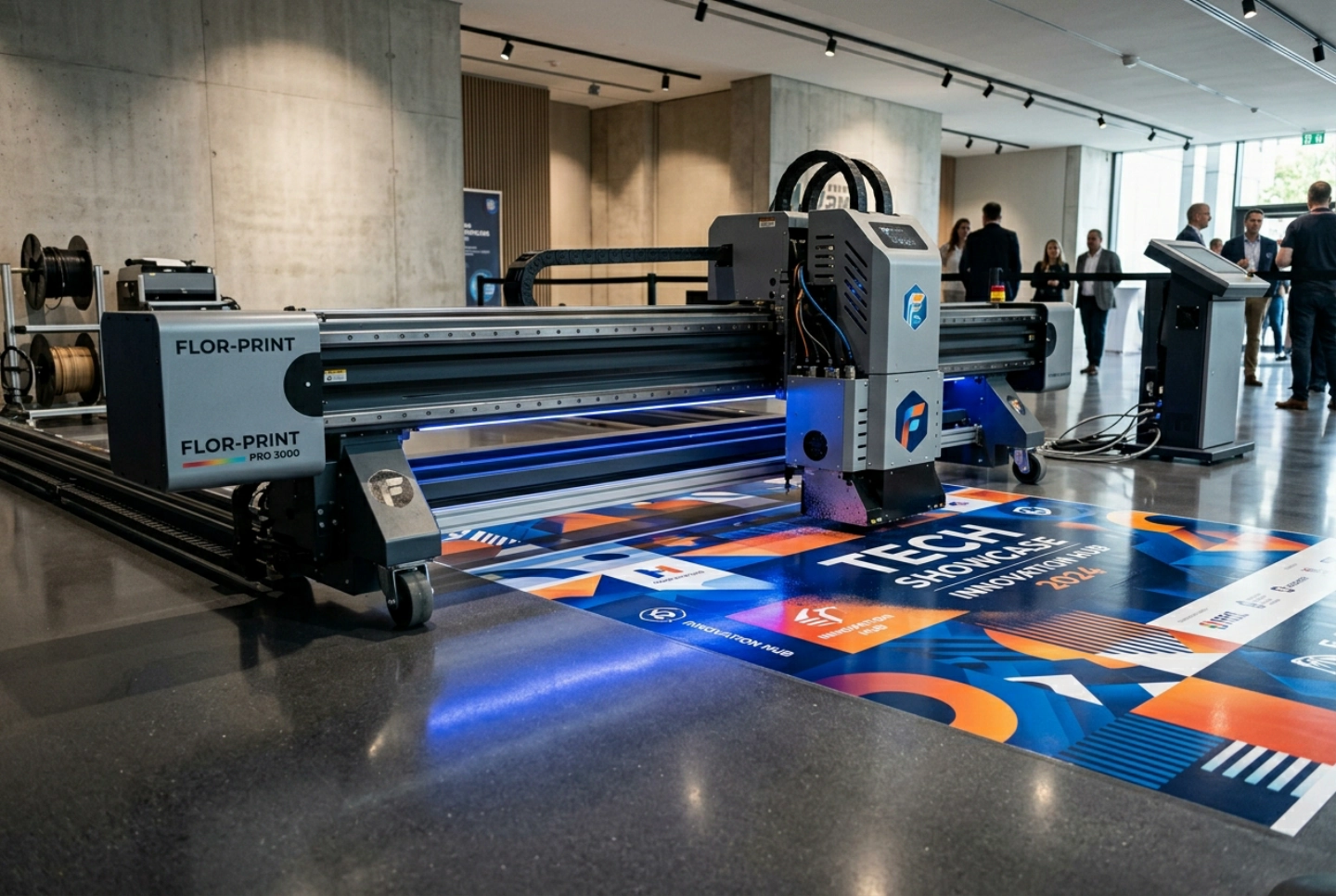
Because floor work is surface-dependent, the exact handling and settings are matched to your material — that's why the fit is confirmed against your job rather than promised as one fixed spec.
The full floor-printer spec sheet — covering print speed, resolution, maximum media size, power and mechanical detail — is in preparation for this machine. Rather than post half-finished numbers, we send the current spec pack together with your quote, matched to the floor surfaces you're printing. Ask for it and we'll get it in front of you.
Want to know the machine printing these floors won't arrive as a paperweight? Meet the line behind it. ↓
The floor machine ships from a line that verifies, burns-in and certifies every unit.
Talk to a floor-printing engineerAdding a floor line means trusting a machine you haven't seen run. Every unit clears the same checks, certifications and cover as the rest of the range before it ships — verified for how it prints, certified for the markets you sell into, and covered after the crate is opened. Here's what stands behind yours.
Every machine runs a 5-checkpoint QC flow under an ISO 9001 quality manual before it leaves the line — the floor machine included. Two of those checkpoints matter most.
Printhead, mainboard and motors verified before assembly.
No part advances without a stamp on the build sheet.
Each unit is function-tested for print alignment, ink delivery and surface adhesion on floor-type media. A unit that doesn't perform cleanly doesn't ship — it goes back.
Every unit runs continuous print patterns for 24 hours in a dedicated burn-in room. The early-life failures that scare buyers surface here, in our building — not in yours.
Kit completeness and packing checked before sealing.
It's a pass/fail gate with a paper trail behind every serial number — the function test and the 24-hour burn-in are where the floor machine proves it prints before it ever reaches your first paid floor job.
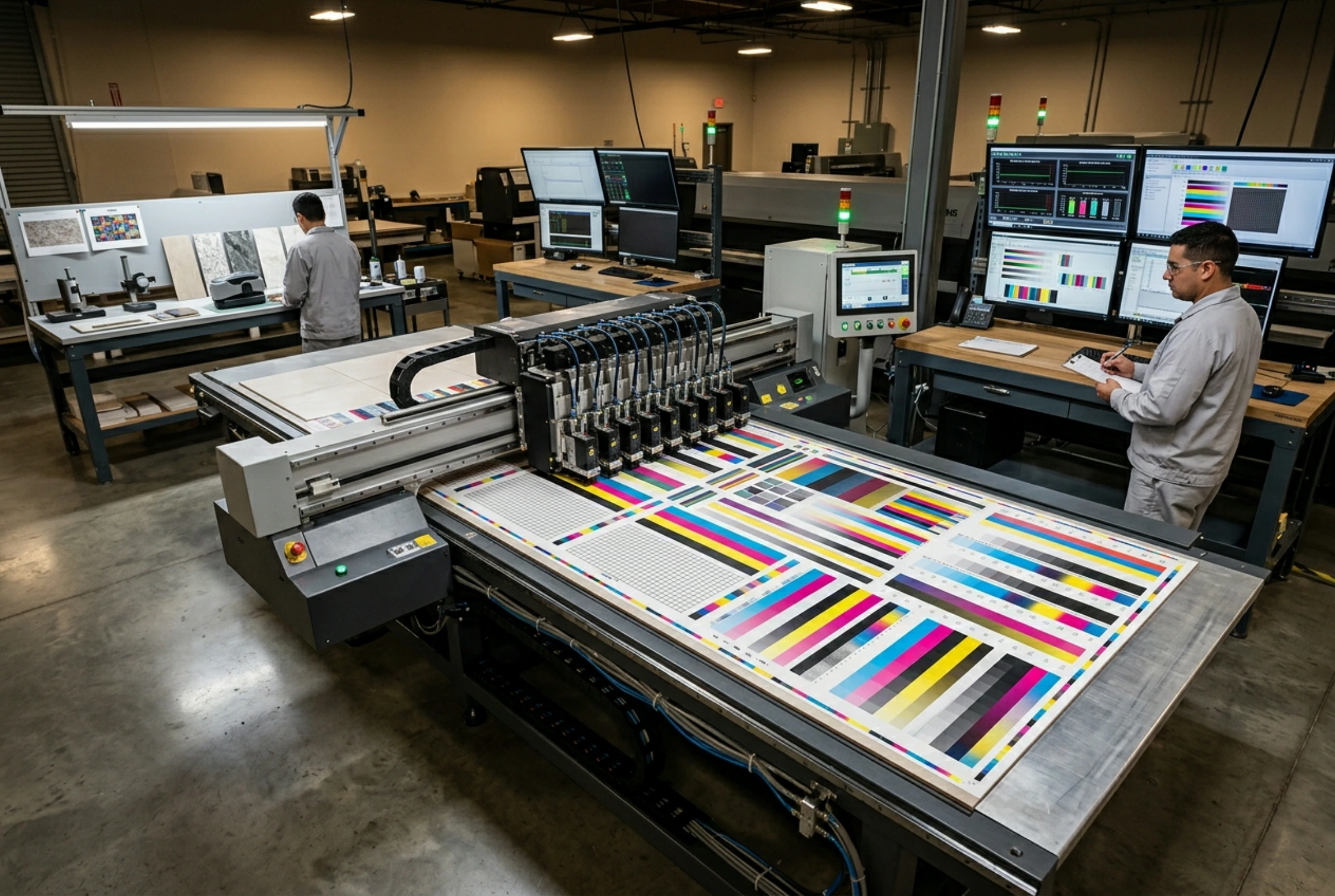
Function-test bench and the 24-hour burn-in room (placeholder — final footage from the line).
Four certifications, framed by what they clear this machine to do — not company wallpaper:
Electromagnetic compatibility & low-voltage directive for the printer assembly — EU market.
Radio-frequency emission compliance for the printer electronics — US & Canada.
Restriction of hazardous substances in electronics & consumables — EU + partner markets.
Quality-management system covering design, assembly, QC and after-sales.
All four are third-party validated (TÜV-equivalent). Certificate copies are released during the quote step under NDA rather than published on the page — the reason you won't see certificate numbers printed here.
Real customer setups, by the kind of shop and the floors they print — region and industry only, names under NDA, no headline metrics.
Added the floor machine to print graphics onto tile and epoxy floors for retail and showroom fit-outs, keeping the work in-house. (Name under NDA.)
Runs the floor line alongside its existing wall work, printing epoxy and screed floor graphics for commercial interiors. (Name under NDA.)
Uses it for printed floor graphics on temporary event flooring for exhibitions, pop-ups and branded activations. (Name under NDA.)
Buyer protections, stated in specifics — no open-ended promises we can't honor:
Every unit clears the 24-hour burn-in and function test before it ships — the shakedown happens on our floor, not your first job.
A defined 24-month parts warranty — a real window we stand behind, not a "lifetime" claim no factory can honor.
Transit damage reported within 7 days of delivery is covered — the risk of the freight leg isn't yours to absorb.
Core parts are stocked for at least 5 years — the machine keeps earning instead of getting orphaned after one fault.
Seen enough? Get a factory-direct quote on the floor machine. ↓
Tell us the floors you want to print — tile, epoxy, screed or event flooring — and you get a factory-direct quote back with the current spec pack matched to your surfaces, for a single floor machine, no full-container minimum.