Most sign shops already get asked for murals. A client who ordered window graphics wants "something on the back wall too." A franchise that bought exterior signage wants the same artwork inside every location. A school calls about a donor wall or a hallway map. Until recently the honest answer was to print wallcovering, hand it to an installer, or pass the job to a muralist.
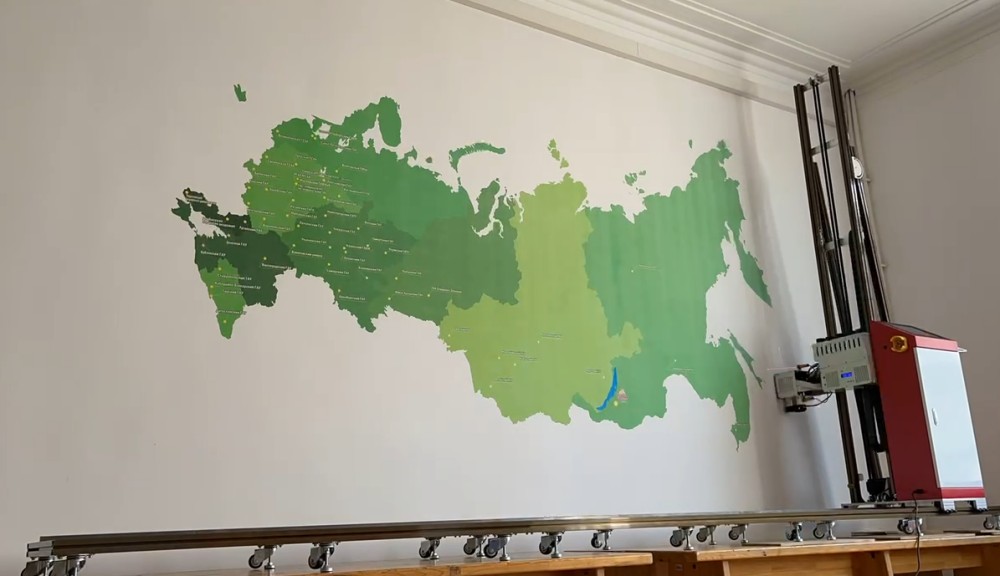
Direct-to-wall printing has changed that answer for a growing number of shops. A vertical wall printer rides on a floor rail in front of the wall and jets UV-curable ink straight onto the painted surface, curing it on contact. There is no media to print, laminate, trim or hang. This guide looks at where that fits in a sign and graphics business, which jobs it suits, how to survey and quote them, and when the older methods are still the better call.
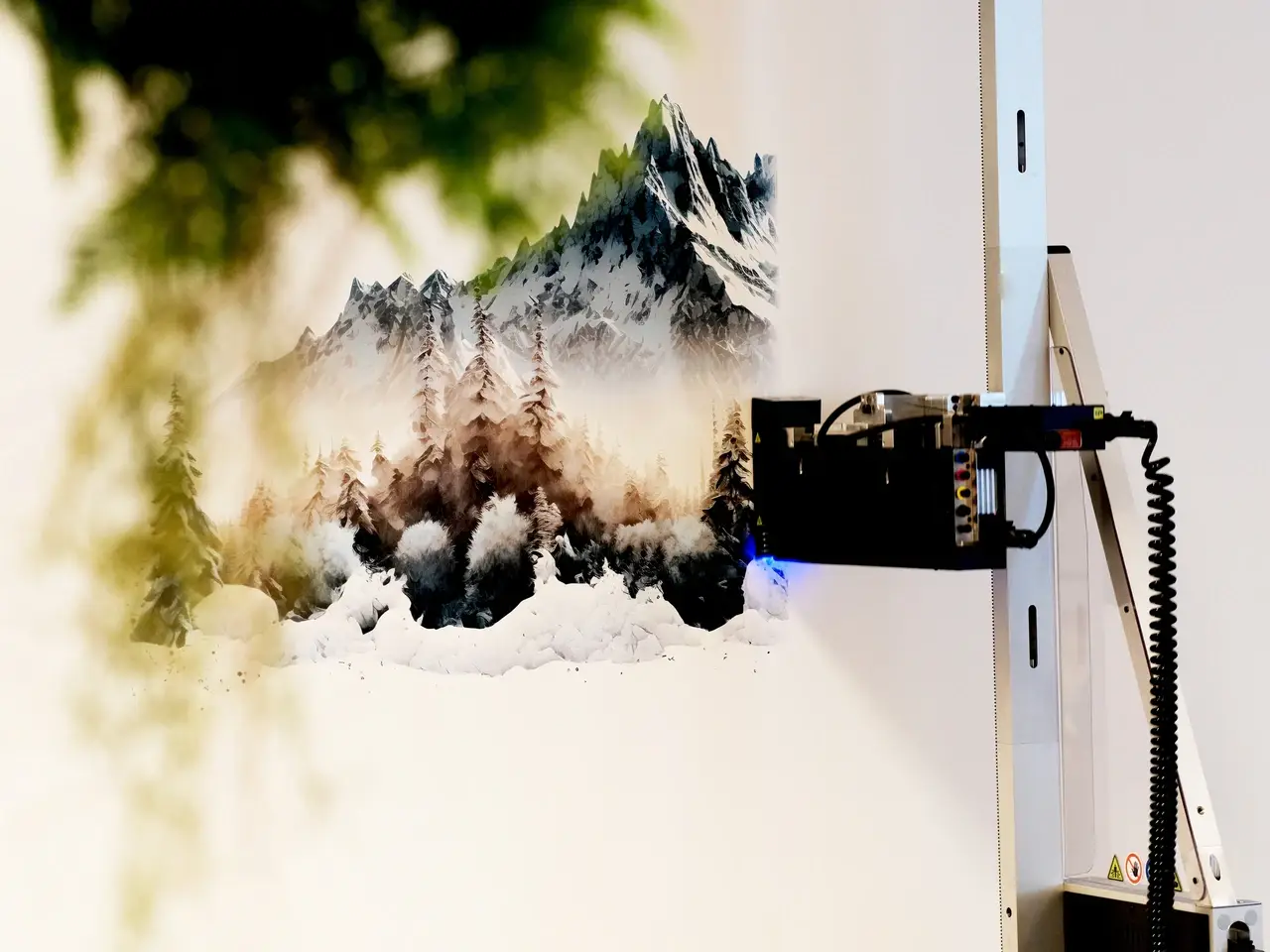
Why Mural Requests Keep Landing on Sign Shops
Clients don't separate "signage" from "walls" the way the trade does. To a property manager or a marketing lead, the shop that produced the lobby sign is the obvious place to ask about the lobby wall. Three trends make that request more frequent:
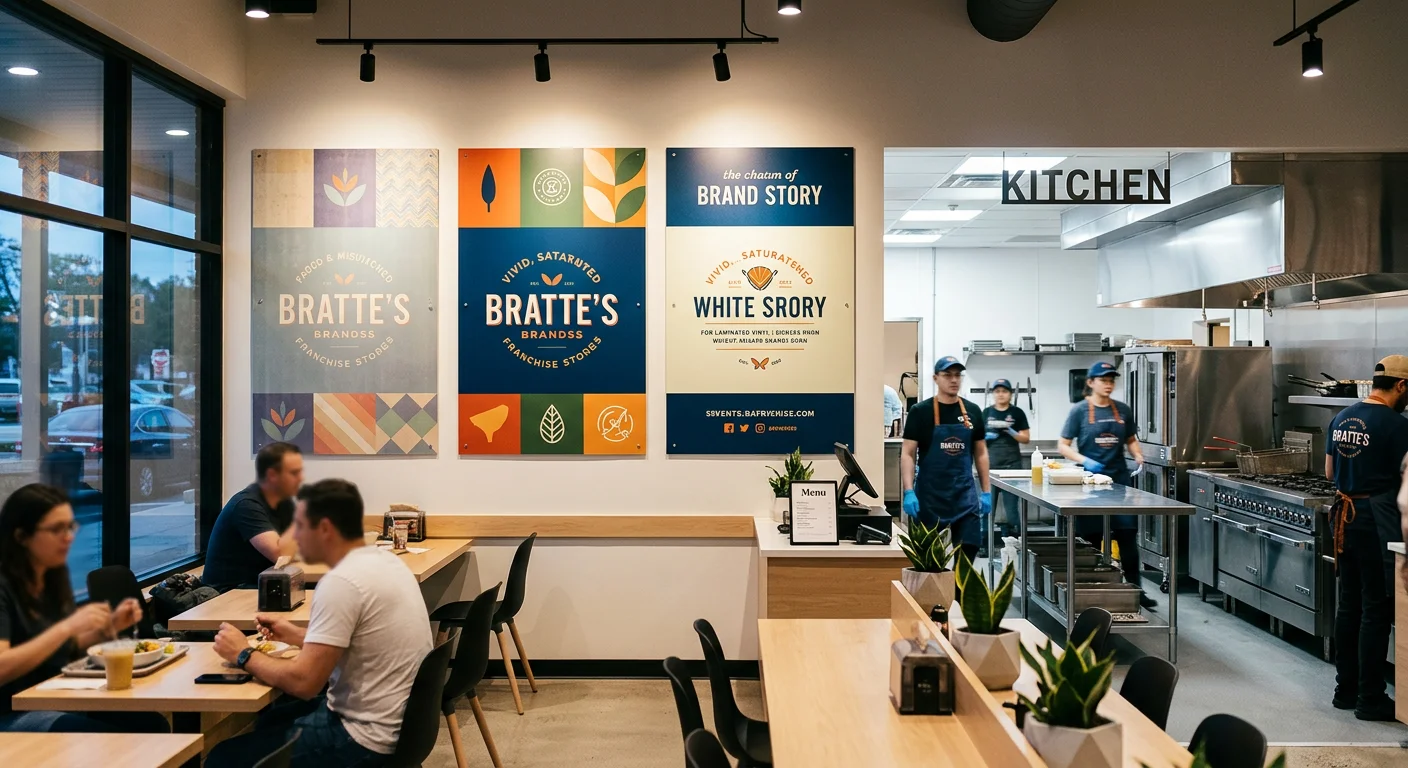
- Brand interiors. Offices, gyms, clinics and retail stores now treat a feature wall as part of the brand system, alongside the fascia sign and the window vinyl.
- Short refresh cycles. Retail and hospitality interiors are refreshed more often than they used to be, so a wall graphic is closer to a campaign asset than a permanent fixture.
- Multi-site rollouts. Chains want the same wall in every location, produced to the same color standard as their printed signage.
A shop that can say yes to the wall keeps the whole project, and the client relationship, under one roof.
Direct-to-Wall vs. Wallcovering vs. Hand Painting
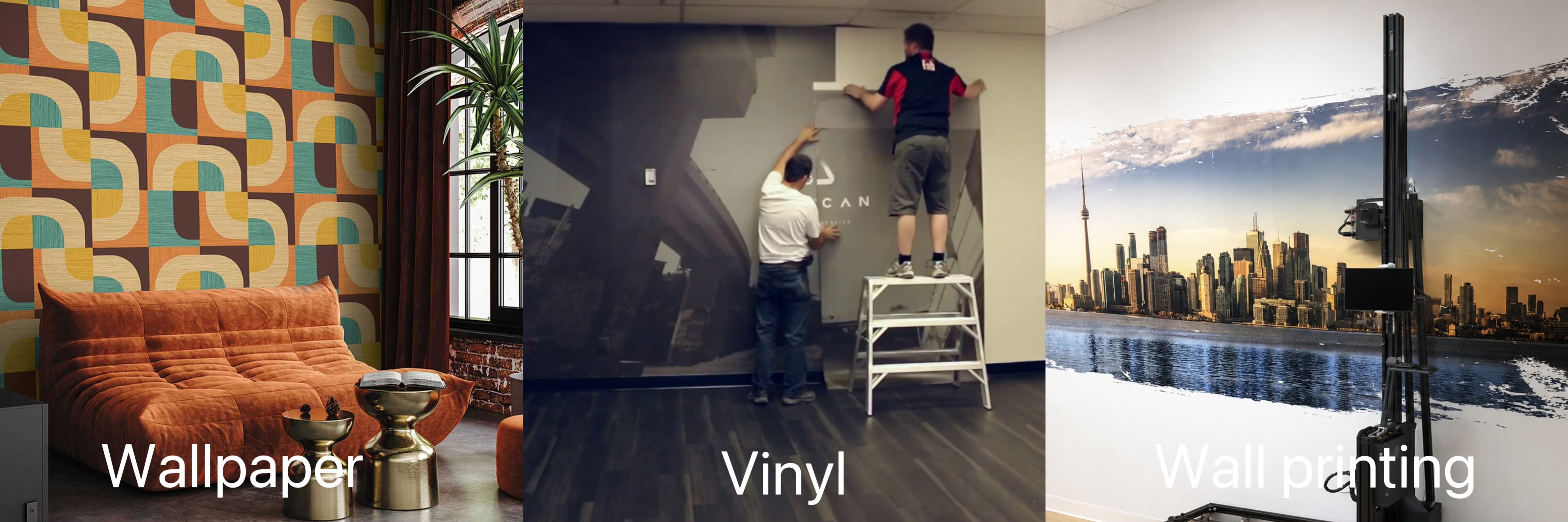
Direct-to-wall printing is not a replacement for every method a sign shop already offers. Each one has a place, and being clear about the trade-offs is what makes a recommendation credible to the client. (For a longer comparison, see wallpaper vs. vinyl vs. direct wall printing.)
| Method | Where it is strongest | Where it struggles |
|---|---|---|
| Printed wallcovering / wall vinyl | Production happens in the shop on equipment you already own; removable and repositionable products are available; very large walls can be panelled. | Seams and panel alignment on long walls; trimming around outlets and fixtures; edges can lift on poorly prepared or textured surfaces. |
| Hand-painted mural | Artistic, one-of-a-kind pieces; very large or irregular exterior surfaces. | Hard to reproduce exact brand artwork, photography or fine type; duration depends on artist availability; not repeatable across locations. |
| Direct-to-wall printing | Photographic detail and exact artwork reproduction; no seams; no media or lamination; the same file can be reproduced across many sites. | Needs a reasonably smooth, sound wall and floor space for the rail; print height is limited by the rail; heavily textured surfaces need a different approach. |
In practice many shops end up offering all three and recommending based on the wall, the artwork and how long the graphic is meant to stay up.
Jobs That Suit a Direct-to-Wall Printer
The jobs that work best share three traits: the artwork is detailed or photographic, the wall is indoors and reasonably smooth, and the client cares about a seamless finish.
- Corporate brand walls – logos, timelines and values statements in reception areas and meeting rooms.
- Retail and hospitality feature walls – photographic backdrops behind counters, restaurant themes and photo-friendly walls. See brand wall printing for franchise chains.
- Schools, libraries and public buildings – maps, timelines, reading corners and donor recognition walls, where fine type and accurate detail matter.
- Wayfinding and information walls – floor directories and campus maps, often paired with the dimensional signs the shop already produces.
- Healthcare and wellness spaces – calming photographic scenes in waiting and treatment rooms.
A useful way to think about it: if you would normally print the artwork on wallcovering and worry about the seams, it is a candidate for printing directly on the wall.
Surveying the Wall Before You Quote
The site survey decides whether a job is profitable, so it is worth standardizing. These are the questions to answer before quoting:
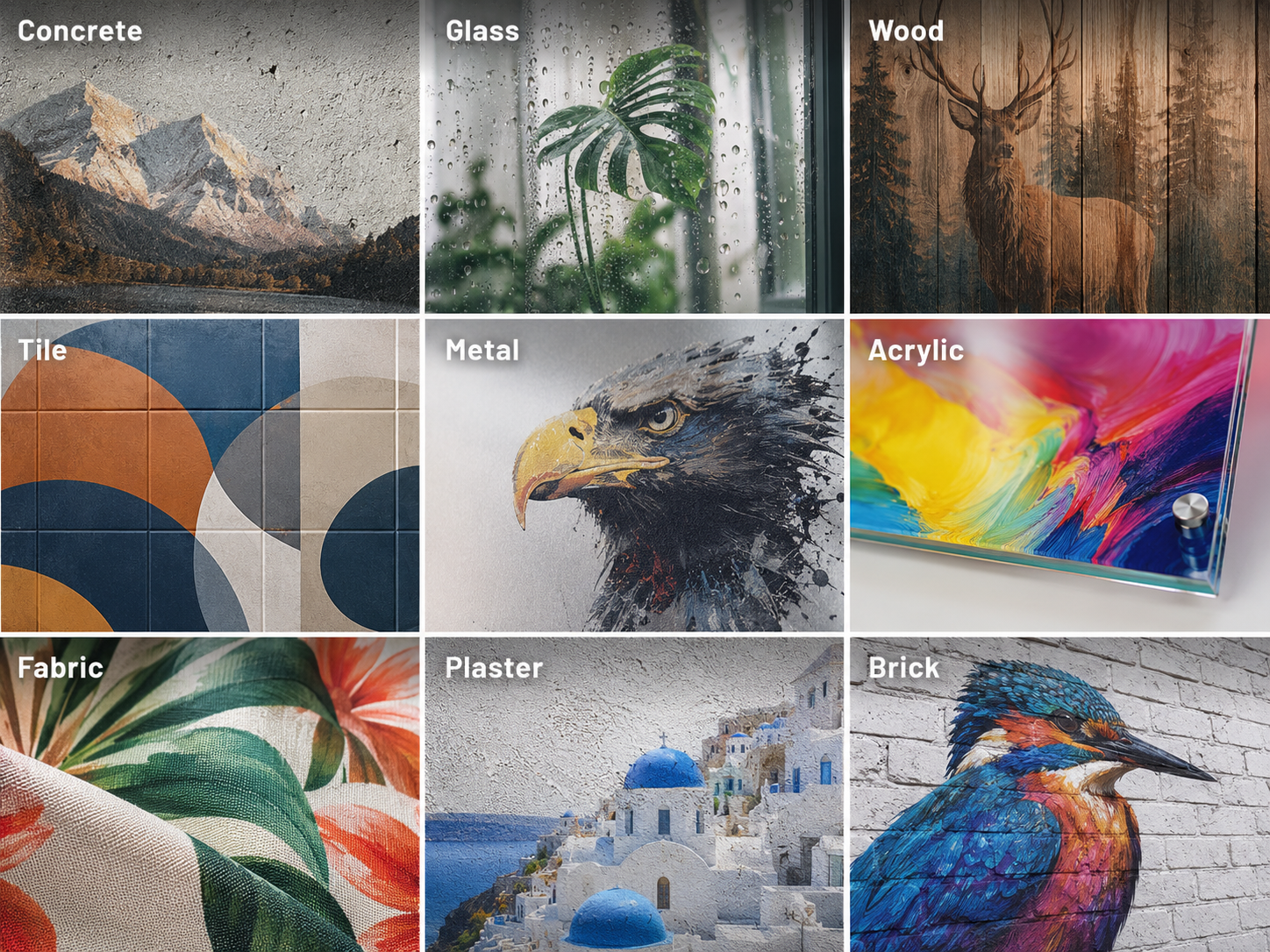
- Surface and finish. Painted drywall, plaster, concrete, brick, wood and glass can all be printed, but results depend on texture and finish. Heavy texture, flaking paint or damp walls should be corrected first. Our surface material guide covers this in detail.
- Base color. A light base gives the most accurate color. Dark or saturated walls usually call for a white underlayer or a repaint, which changes both time and price. See printing on dark walls.
- Print height. Standard machines print from the floor up to 2.5 m, with custom rails extending to 3.5 m. Anything above that is a job for wallcovering or a scaffold-based method.
- Floor space and access. The rail sits on the floor in front of the wall, so you need a clear, fairly level strip along the print area, a way to get the machine into the room, and a power outlet nearby.
- Obstructions. Outlets, switches, thermostats, handrails and skirting boards. Most can be masked or designed around; fixed objects that project from the wall break up the print run.
- Environment and schedule. Is the space occupied? Can you work after hours? Outdoor-facing or exterior walls also raise durability questions; see how long UV wall printing lasts outdoors.
Photographs of the wall, with a tape measure visible, save a return trip for many jobs. A small test print on site is the most reliable way to confirm adhesion and color on a surface you have not printed before.
Preparing Artwork for a Wall
Sign shops already have the prepress skills these jobs need. A few points are specific to wall printing:
- Resolution follows viewing distance. A wall seen from across a lobby does not need the same pixel density as a wall read at arm's length. Set expectations with the client early, especially when the artwork comes from stock photography.
- Measure the real wall, not the drawing. Walls are rarely perfectly square. Build the file from site measurements and leave bleed at the edges and around obstructions.
- Proof color on the actual surface. The same file looks different on a warm white wall and on a cool white one. A printed test patch on the wall is a better approval than a screen proof.
- Keep critical type out of trouble spots. Avoid placing small text across outlet covers, corners or joints in the wall.
Quoting and Scheduling the Work
Pricing varies widely by market, so there is no universal rate to copy. What matters is that the quote captures the real cost drivers, which differ from those of a printed graphic:
- Printed area – the base of most quotes, usually charged per square meter or square foot.
- Surface preparation – repairs, priming or repainting, and any white underlayer for dark walls.
- Setup and travel – getting the machine on site, laying the rail and calibrating, which is roughly the same for a small wall as for a large one. Many shops set a minimum charge for this reason.
- Design and file preparation – especially for location-specific artwork.
- Access constraints – after-hours work, occupied spaces and difficult access all add time.
Scheduling is often where direct-to-wall printing helps most. Because the print goes straight onto the wall, there is no production queue for printing, laminating and trimming panels before installation. Artwork changes can also be made up to the day of the print, because nothing has been produced in advance.
Running It as a Service Line
For most sign shops, wall printing works best as an add-on to work they already win rather than a new business. The client who orders a reception sign is offered the feature wall behind it; the chain that orders storefront graphics is offered the matching interior wall in every branch.
The operator does not need a mural-painting background. The skills that transfer are the ones a sign shop already has: file preparation, color management, measuring and site work. A standard job can be run by one trained operator from setup to cleanup; a second person mainly helps with large or multi-section walls and difficult access. Our guide on staffing a wall printer covers this in more depth.
Before buying any machine, it is worth asking the manufacturer about training, the availability of spare parts and printheads, and how quickly technical questions are answered. Downtime on a booked job costs more than the part itself. (Our service-line page for companies explains how we handle these.)
When to Say No – or Choose Another Method
Recommending the right method builds more trust than forcing every wall onto one machine. Direct-to-wall printing is usually the wrong choice when:
- the wall is taller than the rail can reach and the artwork must run to the ceiling;
- the surface is heavily textured, unsound or damp and cannot be prepared;
- there is no floor space for the rail, such as over stairs, fixed furniture or uneven ground;
- the client needs a graphic that can be removed and reused in another location;
- the job is a large exterior wall exposed to harsh weather without suitable prep and ink.
In these cases printed wallcovering, removable vinyl or a muralist may be the better answer, and a shop that offers the full range can still keep the job.
The Bottom Line for Sign and Graphics Shops
Walls are already part of the brief for many sign customers. Direct-to-wall printing gives a sign shop a way to deliver detailed, seamless wall graphics with the same artwork and color control it applies to signage, without adding a wallcovering production and installation step. It does not replace every method, but for indoor walls with detailed artwork it is an option worth adding to the toolkit.