WallPen is one of the best-known premium wall printers on the market—but it is also one of the most expensive ways to enter the wall printing business.
That creates an obvious question for buyers:
Is WallPen worth paying $50,000 or more for, or can a lower-cost alternative deliver the print quality and business capability you actually need?
The answer depends less on maximum DPI and more on what you are buying around the machine.
WallPen combines German-built hardware, proprietary software, training, ink programs, technical support, and a mature wall-printing ecosystem. Its U.S. site currently lists a starting price around $49,630, while another current U.S. WallPen sales page lists a basic package at $53,990 and a complete package at $69,770. Package and regional pricing therefore matter.
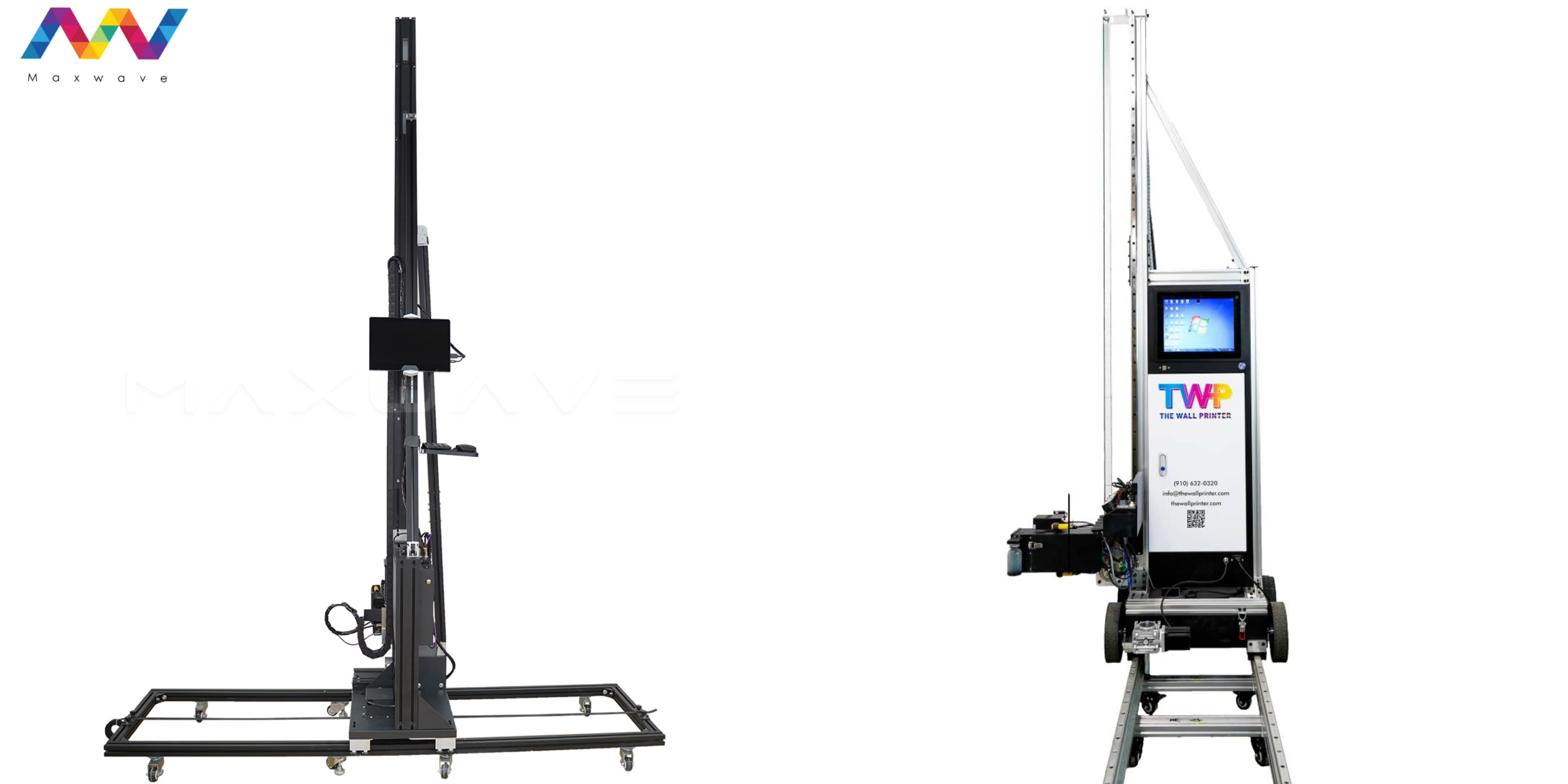
By comparison, The Wall Printer (TWP) currently lists its Tech and Floor Series at $37,495 and its Pro Series at $42,495, while its broader site advertises promotional or entry pricing from $29,995.
Factory-direct alternatives sit much lower. For example, MaxWave's current pricing guide lists an entry DX7 wall printer at $4,380 and a dual-I3200 model at $8,300.
That means buyers are not comparing three versions of the same product.
They are choosing between three different ownership models:
Premium integrated system → WallPen
Premium U.S.-supported system → TWP
Lower-capital factory-direct equipment → Chinese/OEM alternatives
The best option depends on your budget, technical independence, expected workload, and how much you value local support.
WallPen vs Alternatives: What Does the Extra Money Actually Buy?
Price is the biggest difference, so it should be addressed first.
Category | WallPen | The Wall Printer | Factory-Direct Alternatives |
|---|---|---|---|
Typical investment | Roughly $50,000+ | Roughly $30,000–$45,000 | Often $4,000–$12,000 class |
Main advantage | Integrated premium ecosystem | U.S.-based training and support | Low initial investment |
Printhead approach | Ricoh GH2220 individual color heads | Epson i3200 on current Pro Series | Epson DX7/I1600/I3200 common |
White ink | Optional fifth head | CMYK + white standard on current models | Depends on configuration |
Training | Individual training included | Hands-on U.S. training | Commonly remote; verify supplier |
Technical support | Manufacturer / regional partner | Lifetime U.S.-based support | Supplier-dependent |
Best fit | Premium operators prioritizing support | U.S. entrepreneurs wanting local ecosystem | Startups prioritizing capital efficiency |
The largest misconception is that the price difference reflects print quality alone.
It does not.
A $50,000 WallPen does not cost five or ten times more simply because it prints an image five or ten times better than a $6,000 machine.
Much of the premium goes toward engineering, proprietary software, training, logistics, support, warranty structure, brand reputation, documentation, and the overall ownership experience.
WallPen's current package includes the printer, an ink flat-rate period, vertical-axis equipment, two days of individual training for two people, an Android tablet, proprietary software, transport bags, warranty/support coverage, and marketing assistance.
That has real value for a buyer who wants a more structured entry into the business.
But the calculation changes for an experienced sign shop, print company, or technically capable entrepreneur.
If you already understand RIP software, printhead maintenance, UV ink, calibration, and machine troubleshooting, you may not need to spend tens of thousands of dollars for that ecosystem.
That is where lower-cost wall printer alternatives for small businesses become much more interesting.
WallPen: High Initial Cost, Lower Ownership Uncertainty
WallPen is strongest when the buyer wants one supplier responsible for most parts of the ownership experience.
The company develops and manufactures the system in Germany, provides its own software, offers training and technical support, and stocks many spare parts.
The higher purchase price therefore buys a degree of predictability.
That does not automatically make it the highest-ROI option.
It makes it a lower-uncertainty option.
TWP: Similar Premium Model at a Lower Entry Point
The Wall Printer occupies an interesting middle position.
Its current model pricing is below WallPen's typical U.S. package pricing, while still offering a highly structured support model.
TWP currently provides hands-on training at its Wilmington, North Carolina headquarters, U.S.-based technical support, marketing/business resources, and a manufacturer-backed warranty program. Its Pro Series uses an Epson i3200 printhead with CMYK + white UV ink.
For a U.S. buyer, that makes TWP a particularly relevant WallPen alternative.
You still pay a substantial premium over factory-direct equipment, but you are buying domestic training and service rather than managing most technical issues internationally.
Factory-Direct Alternatives: Much Lower Capital Requirement
The third route is completely different.
Current factory-direct pricing shows that commercially positioned wall printers using Epson platforms can be available far below WallPen or TWP pricing. Wallprintgear, for example, currently lists models at $4,380 and $8,300 in its pricing guide.
At this price level, the attraction is obvious.
Instead of investing $40,000–$60,000 in the printer, a startup can keep substantially more capital available for:
Marketing.
Working capital.
Transportation.
Ink.
Spare parts.
Website development.
Advertising.
Customer acquisition.
That can be a major advantage.
But it also shifts more responsibility to the buyer.
Before choosing a factory-direct commercial wall printing machine, verify exactly what is included in the quotation rather than assuming the ownership package matches WallPen or TWP.

Features: Where WallPen Is Better—and Where Alternatives Can Compete
WallPen's strongest technical argument is not maximum resolution.
It is the integration of its motion system, sensors, printheads, software, and ink.
The current E2 uses separate Drop-on-Demand printheads for CMYK with optional white and can print up to approximately 4 meters high with the extension system. WallPen specifies a resolution range of 300–1,200 DPI.
The system also uses laser sensing and a motor-driven steering system to help it follow vertical and somewhat curved surfaces.
Do Not Compare Maximum DPI Alone
This is where many wall-printer comparisons become misleading.
One supplier may advertise 1,200 DPI.
Another may advertise 2,400 or 2,880 DPI.
That does not mean the second printer automatically produces a mural twice as good.
Real wall-printing quality depends on:
Printhead condition.
Droplet placement.
Motion accuracy.
Printhead-to-wall distance.
Pass mode.
Artwork resolution.
Ink behavior.
White-ink registration.
Surface condition.
WallPen itself notes that most real jobs are printed around 600 × 720 DPI rather than always using the maximum 1,200-DPI setting.
TWP's current Pro platform, meanwhile, advertises its Epson i3200 system at up to 2,400 DPI.
The practical lesson is simple:
Ask to see the same artwork printed by each machine at a commercially realistic speed.
That comparison is much more useful than maximum-DPI numbers.
Printing Speed Needs the Same Treatment
WallPen's technology page advertises maximum throughput up to 172 square feet per hour, or roughly 16 m²/h. However, its own ROI calculator models high-quality production at about 2 m²/h, and its comparison materials describe typical quality-focused operation around 2–5 m²/h.
That does not mean either number is wrong.
It means speed changes dramatically with print mode.
This is true across the industry.
When comparing UV wall printing equipment, ask suppliers for speed at:
Normal commercial quality
rather than:
Maximum draft speed
Also ask whether the quoted speed uses CMYK only or includes white ink.
White underbase printing on dark surfaces can materially change job time.
Printhead Architecture
WallPen uses individual Ricoh GH2220 printheads rather than one combined multi-channel head. The company highlights that if one color head fails, it can be replaced individually.
TWP's current Pro system uses an Epson i3200 eight-channel platform.
Lower-cost factory-direct printers commonly use Epson DX7, I1600, or I3200 configurations; MaxWave's current pricing guide shows both DX7 and dual-I3200 models.
There is no universal best printhead.
The better question is:
How much does replacement cost, how easy is it to source, and what happens to production when it fails?
For a business owner, those questions matter more than the logo printed on the head.
Surface Flexibility
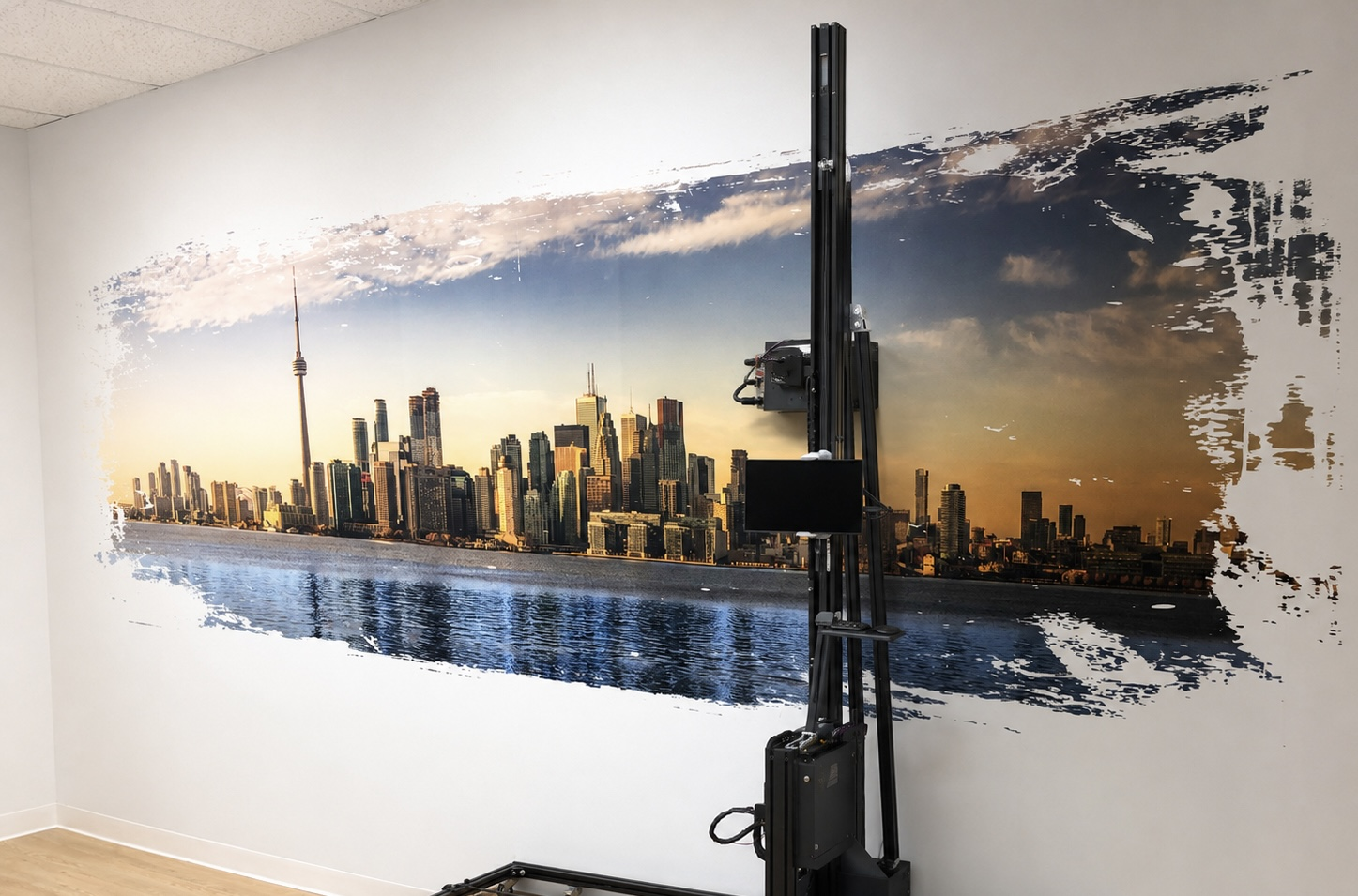
WallPen states that its UV system can print on materials including concrete, glass, wood, tile, fabric, plaster, and clinker.
TWP similarly markets its machines for drywall, concrete, glass, tile, brick, and other surfaces, with CMYK + white UV capability included on its current machines.
Many factory-direct UV printers also advertise multi-surface printing.
But buyers should test the surfaces they actually plan to sell.
A supplier saying “prints on glass” is less useful than receiving a sample on your specific glass, tile, painted wall, brick, or wood finish.
Surface preparation and ink adhesion can matter as much as the printer.
Operating Cost and Support: The Differences That Matter After Purchase
The purchase price appears once.
Operating costs and support follow you for years.
Ink Cost
WallPen states that its system typically consumes approximately 5–10 ml of ink per m², with an estimated ink cost of roughly $2–$5/m² after the included flat-rate period.
The included ink program is unusual and reduces consumable uncertainty during the early ownership period.
However, ink alone should not determine the purchase.
Your actual cost per finished square meter should include:
Ink + maintenance + labor + machine time + travel + setup + spoilage + overhead
A wall printing machine saving $1/m² on ink is not necessarily cheaper if it adds an extra hour of setup to every job.
Setup and Portability
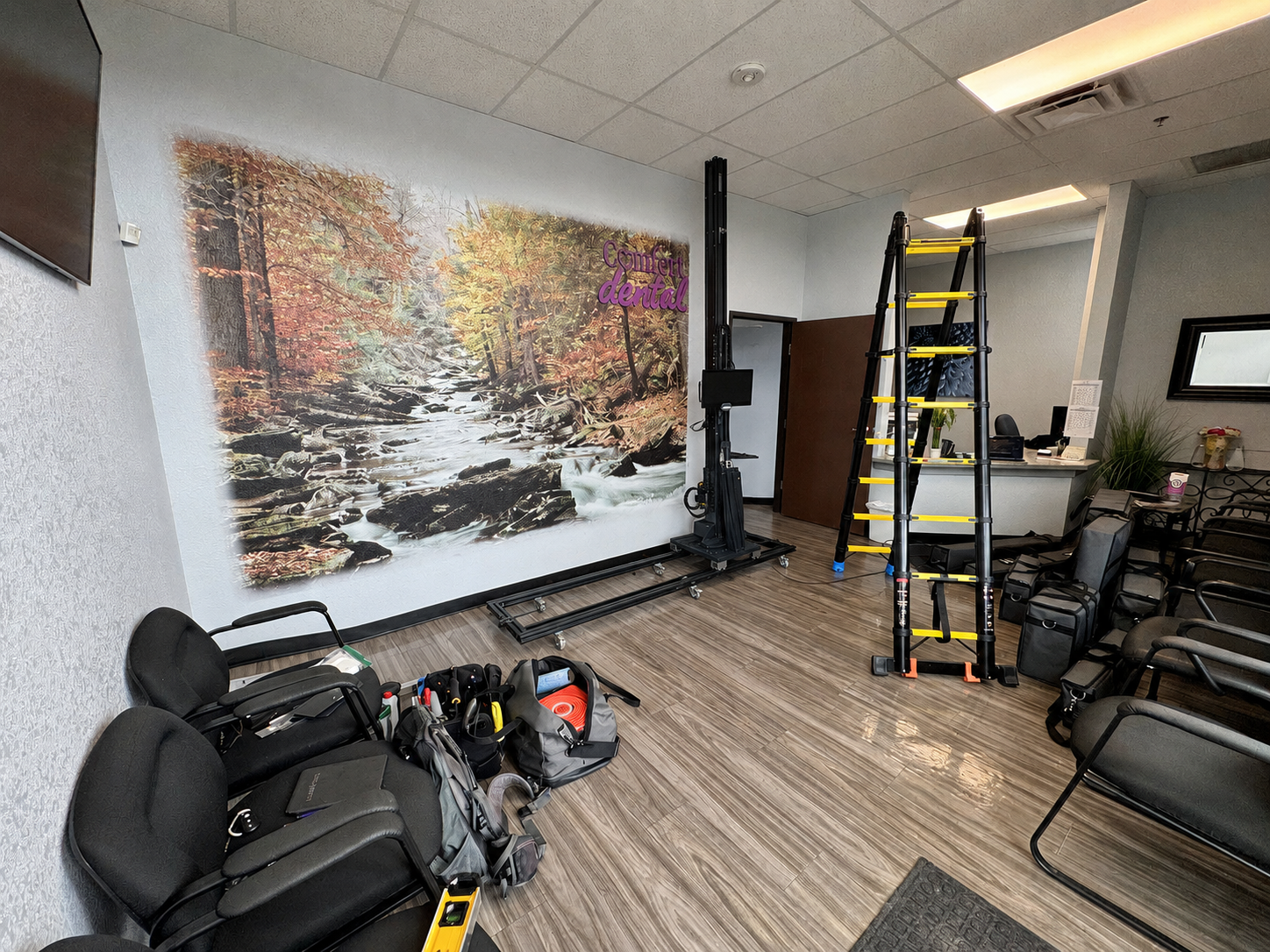
WallPen's system is designed as a modular portable machine distributed across transport bags; the U.S. FAQ lists a total base-unit weight around 196 lb, with the heaviest bag about 49 lb.
This matters because wall printers are usually transported to the customer's location.
But portability should be judged from your actual workflow.
Ask:
Can one person transport it?
How long does assembly take?
Does it require rails?
How much vehicle space does it occupy?
How difficult is calibration after transport?
A lower-cost wall printing machine for mobile mural businesses may actually fit a solo operator better if it is easier to transport and the operator is comfortable handling more setup manually.
WallPen Support
WallPen includes two days of individual training for two people, with U.S. training locations or online training available. Its FAQ also states that the purchase includes warranty, hotline access, service support, and software updates during the initial coverage period. Spare parts can be ordered from WallPen or a local partner, with many parts stocked.
For buyers who do not want to troubleshoot a machine largely on their own, this is one of the strongest arguments for the premium.
TWP Support
TWP takes a similarly support-heavy approach.
Its current materials emphasize hands-on training in Wilmington, lifetime U.S.-based technical support, an owner community, business tools, and manufacturer-backed warranty coverage.
For U.S. operators, the practical advantage is obvious:
If technical support and local parts logistics matter more than minimizing equipment price, TWP deserves to be compared directly with WallPen.
Factory-Direct Support
Factory-direct equipment should not automatically be described as having “bad support.”
The more accurate description is:
Support quality varies much more by supplier.
Some manufacturers provide structured online training, live video troubleshooting, spare-parts kits, manuals, and long-term remote support.
Others primarily sell hardware.
That means due diligence matters more.
Before purchasing, ask the supplier to document:
Training included.
Warranty exclusions.
Remote support channel.
Working hours.
Spare-parts availability.
Printhead pricing.
Software licensing.
Parts shipping process.
Recommended spare-parts kit.
Do not compare WallPen's complete ownership package with only the FOB machine price of another supplier.
Compare complete package against complete package.
Which Wall Printer Is Better for Your Business?
There is no single winner.
Choose WallPen When...
Wall printing will be a serious professional service rather than an experiment.
You value German-developed hardware and proprietary software.
You want structured training and manufacturer support.
You prefer more predictable ownership over minimum initial investment.
You expect premium commercial customers to justify the equipment cost.
You have enough capital that a $50,000+ printer does not eliminate your marketing and working-capital budget.
In this scenario, WallPen's premium can make sense.
Choose TWP When...
You operate primarily in the United States.
Local training and domestic technical support are priorities.
You want a premium commercial system but want an alternative to WallPen's pricing and ecosystem.
You value an established owner community and business-support infrastructure.
Current TWP model pricing places its main machines below typical current WallPen U.S. package pricing, making it one of the most logical premium alternatives to compare.
Choose a Factory-Direct Alternative When...
Your startup budget matters more than premium brand ownership.
You would rather invest $5,000–$10,000 in equipment and keep capital available for marketing and customer acquisition.
You are comfortable with online training and remote troubleshooting.
You already have printing, signage, equipment, or technical experience.
You are willing to verify the supplier thoroughly before purchasing.
This route can dramatically reduce the amount of revenue required before the machine investment is recovered.
But it works best for buyers who understand that lower purchase price usually means they must take more responsibility for evaluating the machine and supplier themselves.
For buyers researching a factory-direct wall printer with lower startup cost, the smartest approach is to send every shortlisted supplier the same application requirements.
Ask each company to print the same artwork on the same type of surface.
Then compare:
Delivered price.
Print quality.
Real production speed.
White-ink performance.
Setup time.
Software.
Training.
Spare parts.
Warranty.
Technical support.
That creates a much fairer comparison than WallPen versus a random marketplace listing.
Conclusion
WallPen is not the cheapest wall printer—and that is not what it is trying to be.
Its value proposition is a premium, integrated ownership experience built around German engineering, proprietary software, training, technical support, an ink program, and an established wall-printing ecosystem. Current U.S. pricing places the investment roughly in the $50,000+ range depending on package.
TWP offers a different premium path, particularly for U.S. buyers who value domestic training and technical support, with its currently listed core wall-printer models sitting around the upper-$30,000 to low-$40,000 range.
Factory-direct alternatives can reduce the equipment investment dramatically—sometimes into the $4,000–$10,000 range—but require more careful evaluation of configuration, training, spare parts, software, and after-sales support.
So the decision should not be:
“Is WallPen better than a cheaper wall printer?”
It should be:
“How much am I willing to pay to reduce ownership risk, and which level of support does my business actually need?”
A startup with strong technical skills and limited capital may achieve a better ROI with a lower-cost machine.
A premium operator handling valuable commercial contracts may reasonably pay much more for predictable service and support.
The best wall printer is therefore the one that fits your workload, technical ability, risk tolerance, and total business budget.
Before committing $10,000, $40,000, or $60,000 to any system, compare real samples and complete delivered packages—not just specification sheets.
Looking for a professional wall printer alternative to WallPen? Send WallPrintGear your target wall materials, typical mural sizes, expected monthly workload, delivery country, and the WallPen or TWP configuration you are comparing. The team can help you evaluate a suitable configuration and provide a comparable quotation and sample-print plan before you make the final investment.