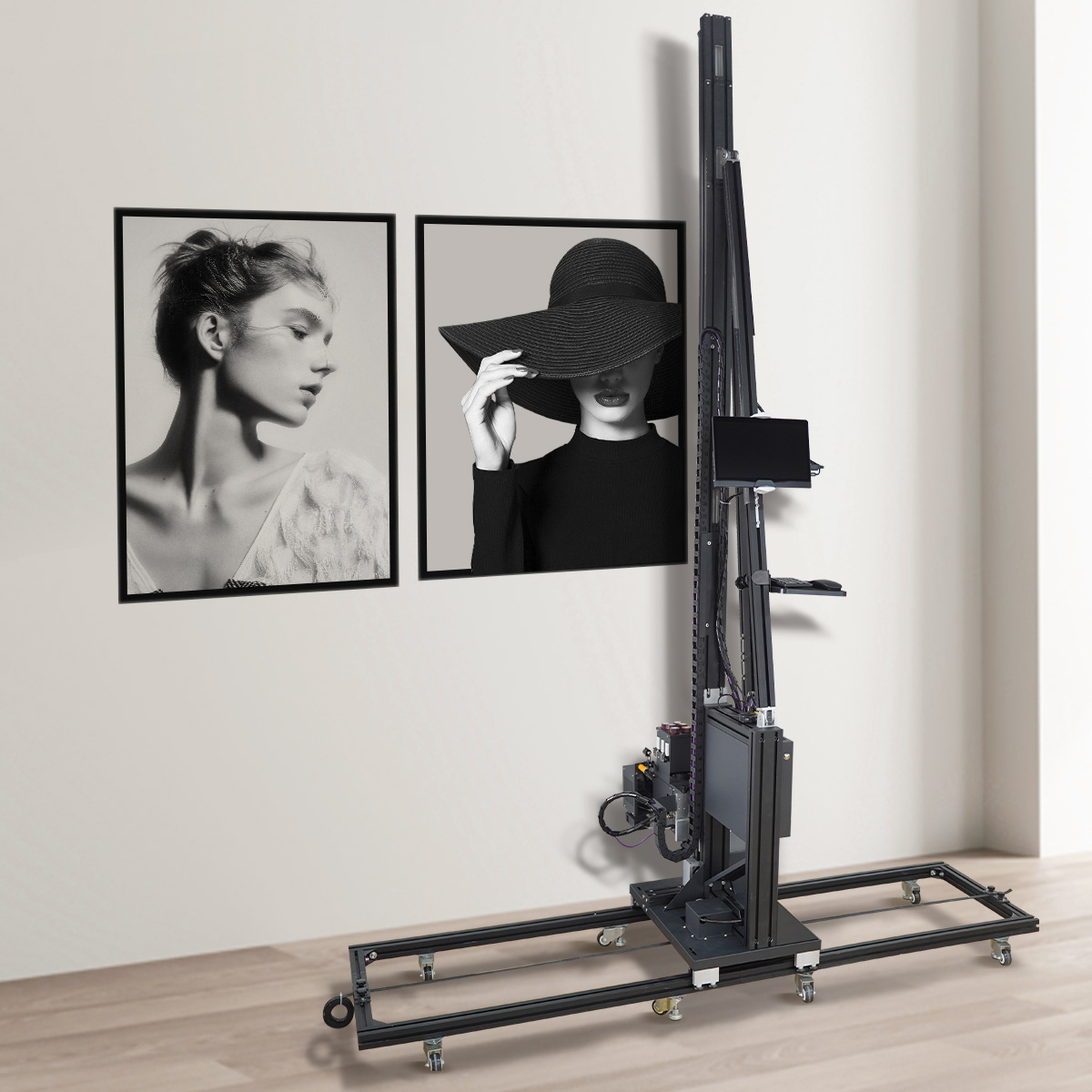
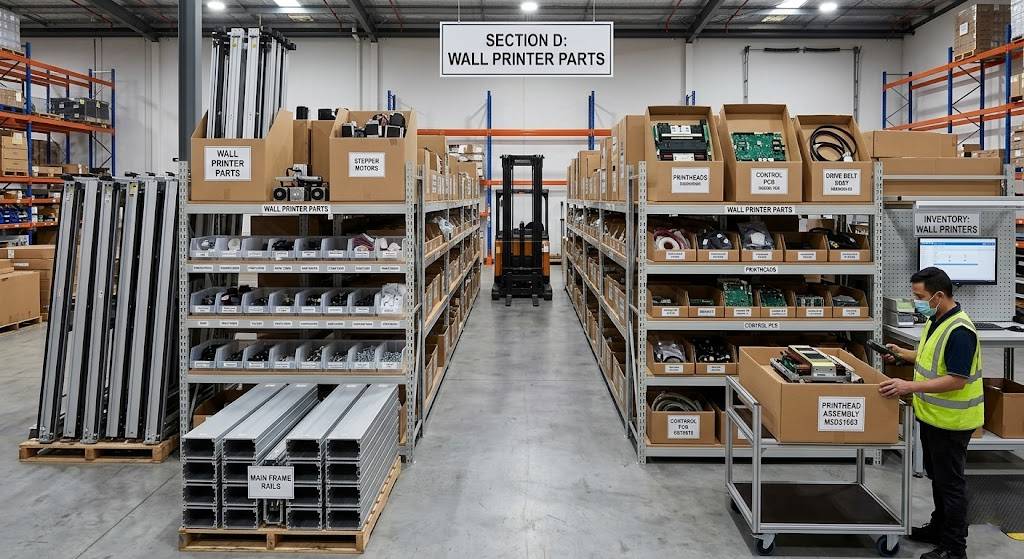
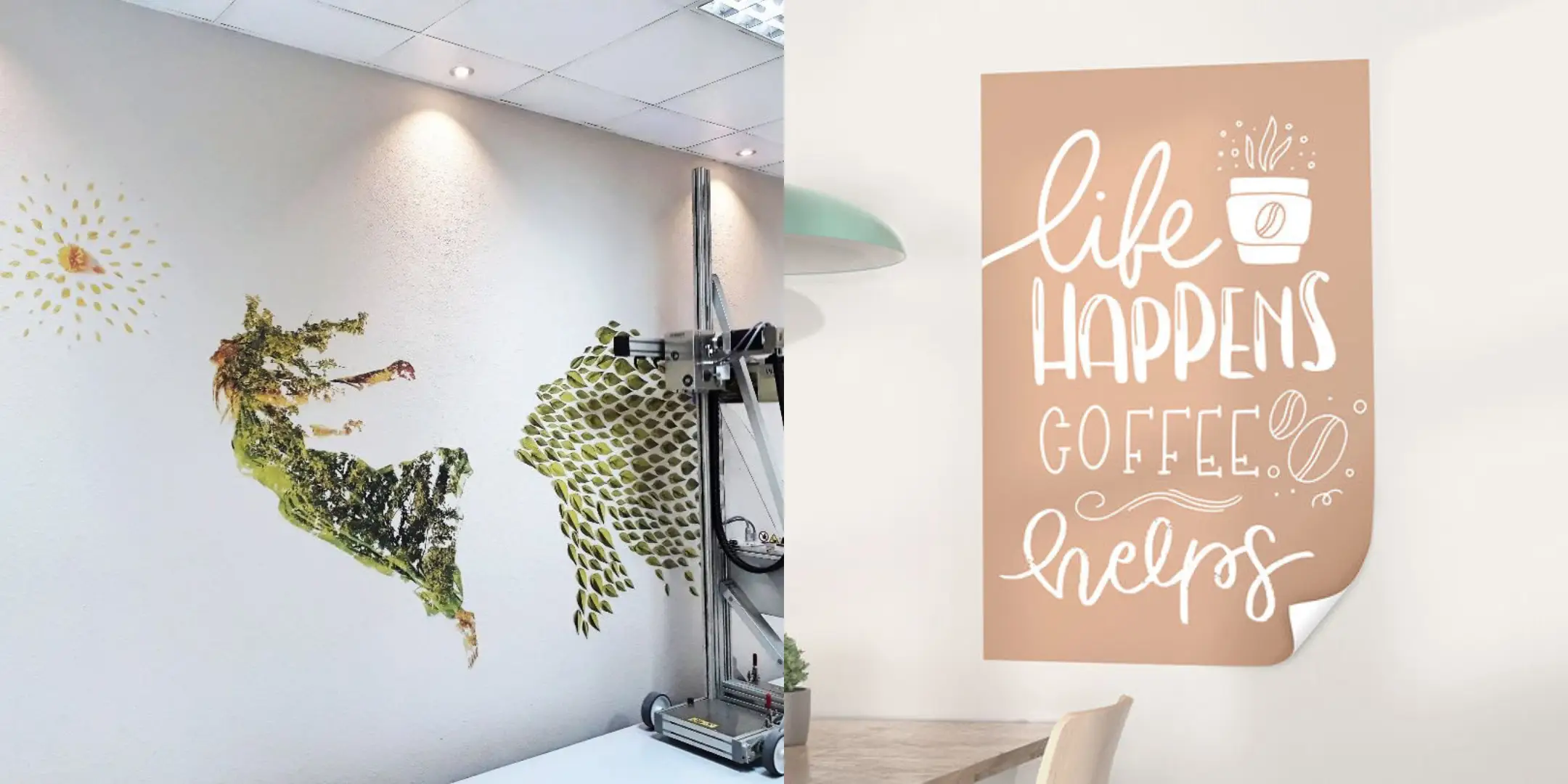
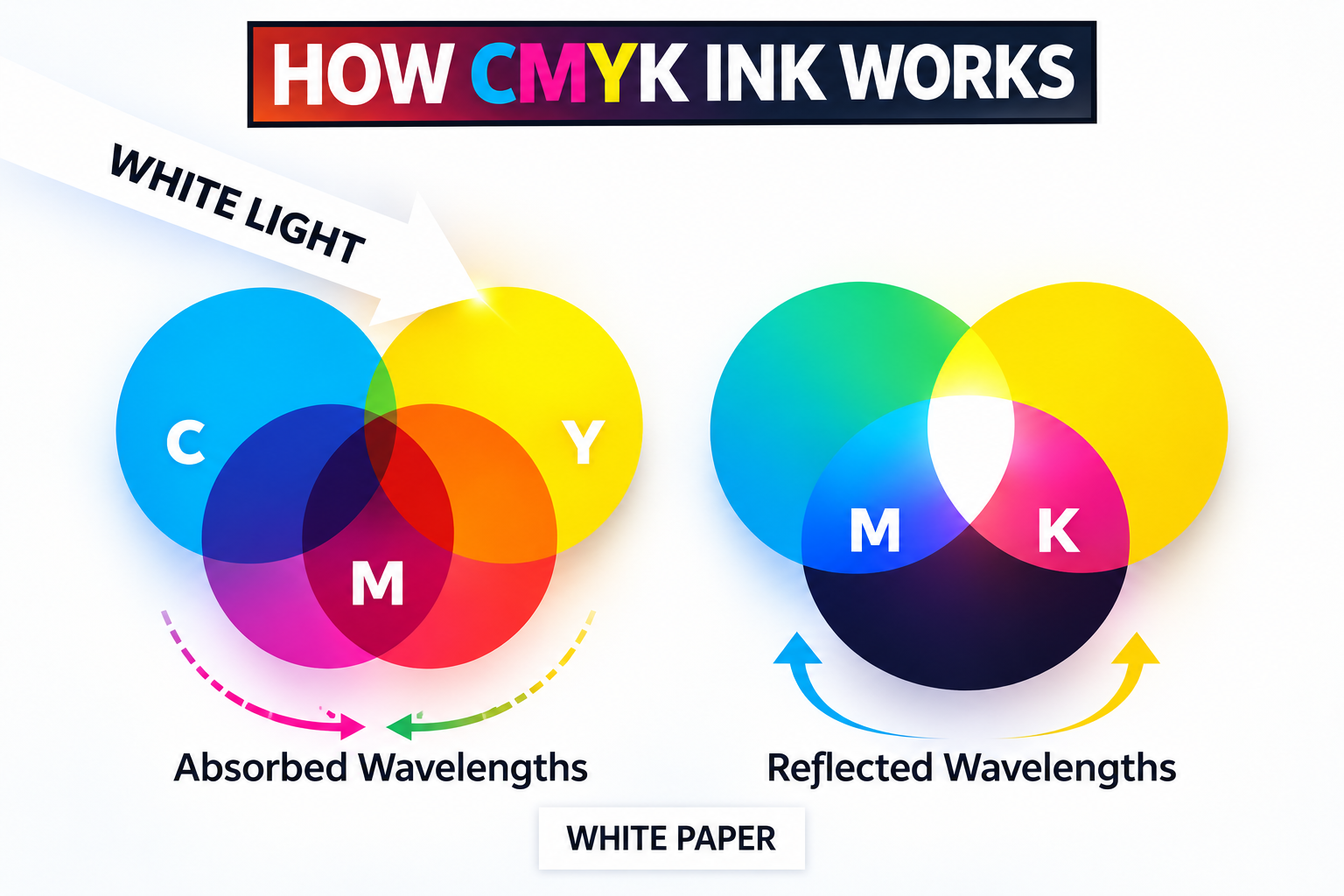
The purchase price of a wall printer is only the first number you need to know.
Once the machine starts working, your real costs come from ink, white ink, cleaning materials, wear parts, printhead replacement, electricity and routine maintenance.
For most buyers, the useful question is not:
“How much does wall printer ink cost?”
It is:
“What does my machine really cost per square meter of completed printing?”
For a wall printer, it helps to separate costs into two levels:
Cost Level | What It Includes |
|---|---|
Machine operating cost | Ink, cleaning fluid, electricity, wear parts, printhead reserve |
Full job cost | Machine cost + labor, surface preparation, travel and overhead |
Mixing these two numbers is one of the biggest reasons wall-printing cost estimates become confusing.
A simple logo on a white wall may use very little ink and almost no surface preparation. A full-color mural on a dark wall may require white ink, more passes and additional preparation.
So there is no single universal cost per square meter.
The correct number comes from your own machine, ink price, artwork and workload.
1. What Does a Wall Printer Really Cost to Run?
A wall printer has four main recurring cost groups:
Ink and white ink
Routine consumables
Printhead and wear-part reserve
Electricity and maintenance
Ink is normally the easiest cost to calculate.
The other three are where many first-time buyers underestimate ownership.
For a wall printing machine, a useful machine-only formula is:
Machine Cost per m² = Ink + Cleaning Consumables + Electricity + Wear Parts + Printhead Reserve
Then, when quoting customers, use a second formula:
Full Job Cost per m² = Machine Cost + Surface Prep + Labor + Travel + Overhead
These are not the same number.
Machine Cost Is Not Job Cost
Imagine your printer uses only $1 of ink on one square meter.
That does not mean the job costs $1/m².
You may also spend time:
Preparing the wall.
Transporting the machine.
Setting it up.
Preparing artwork.
Operating the printer.
A small 3 m² logo can therefore have a higher cost per square meter than a 30 m² mural, even if ink consumption is almost identical.
This is why professional operators should track both:
Cost per printed square meter
and
Contribution margin per completed job
The first tells you whether the machine is operating efficiently.
The second tells you whether the business is profitable.
2. How Much Does Wall Printer Ink Cost?
The basic ink calculation is straightforward:
Ink Cost per m² = Ink Consumption × Ink Price per ml
And:
Ink Price per ml = Price per Liter ÷ 1,000
For example, if your machine consumes 15 ml/m² and your ink costs $60/L:
$60 ÷ 1,000 = $0.06/ml
15 × $0.06 = $0.90/m²
If the machine consumes 10 ml/m² but the ink costs $150/L:
$150 ÷ 1,000 = $0.15/ml
10 × $0.15 = $1.50/m²
This is why you should never compare machines only by ink consumption or only by ink price.
You need both numbers.
Artwork Coverage Changes Ink Use
Wall printer ink consumption is not fixed.
A logo containing large areas of unprinted wall uses less ink than a full photographic mural.
Ink use increases with factors such as:
Image coverage
Saturated colors
White underbase
Multiple passes
Higher ink-density settings
That is why supplier claims such as:
“Ink costs only $0.50/m².”
should always be followed by:
“Using which artwork and print mode?”
A low-coverage sample and a full-wall photograph are not equivalent tests.
White Ink Changes the Calculation
White ink deserves separate attention.
On a white or light-colored wall, CMYK may be enough.
On black, charcoal, navy or other dark walls, a vertical wall printer with CMYK + White may print a white underbase before the color image.
That increases total ink use.
How much depends on whether the artwork uses:
Spot white.
Partial white coverage.
Full white underbase.
One or several white passes.
A small white logo and a full photographic mural on a black wall should not be quoted using the same ink-cost assumption.
The best way to establish your number is to print several representative files and record the actual ink usage.
Build Your Own Ink Benchmark
Instead of relying on one supplier number, test three common job types:
Test Job | What It Tells You |
|---|---|
Light logo | Low-coverage baseline |
Full-color photo | Normal mural consumption |
Dark-wall CMYK+White | High-consumption benchmark |
After several real jobs, calculate your average.
That number is much more useful for future quotations than a catalog estimate.

3. What Do Printheads and Consumables Add?
Ink is not the only recurring cost.
A professional wall mural printer also uses cleaning materials and wear components that need inspection or eventual replacement.
Typical items include cleaning fluid, wipers, cap tops, dampers and filters.
The exact replacement schedule depends on the machine.
Do not replace everything simply because a generic online article says “every six months.”
Cleaning Consumables
Cleaning solution is normally used for printhead maintenance, capping-system care or storage procedures.
Use only fluid compatible with your ink and printhead system.
Substituting household alcohol, water or another printer's cleaning fluid can damage:
Seals.
Tubing.
Dampers.
Printhead components.
The amount used will vary depending on how frequently the machine operates and how often it sits idle.
A machine printing every day may behave very differently from one used only twice per month.
White Ink Can Increase Maintenance
White pigment settles more readily than standard CMYK.
That means CMYK+White printers need reliable white-ink management.
Depending on the machine, this may include circulation, agitation or automatic maintenance routines.
Poor white-ink management can contribute to:
Weak white output.
Nozzle loss.
Restricted ink flow.
More frequent cleaning.
For operators who regularly print dark walls, white-ink maintenance should therefore be included in the operating-cost calculation.
Printhead Cost Needs a Reserve
Printhead replacement is one of the largest occasional ownership expenses.
But avoid using a universal rule such as:
“A wall printer printhead lasts exactly 18 months.”
Real life depends on:
Ink quality.
Maintenance.
Idle periods.
Environment.
White-ink management.
Head strikes and accidental damage.
Instead, ask the supplier for the exact printhead model installed in the machine and the current replacement price.
Then create a reserve.
Calculate Printhead Reserve
You can calculate it by time:
Monthly Printhead Reserve = Replacement Cost ÷ Expected Service Months
Or by production:
Printhead Cost per m² = Replacement Cost ÷ Expected Printed Area
For example, if a replacement head costs $700 and you decide to budget that cost across 10,000 m² of production:
$700 ÷ 10,000 = $0.07/m²
That does not mean the head will fail exactly at 10,000 m².
It means your pricing already contains money for a future replacement instead of treating it as an unexpected emergency expense.
Ask for Replacement Prices Before Buying
Before purchasing a direct wall printer, confirm these five points:
Exact printhead model
Current replacement price
Whether the supplier stocks it
What printhead damage the warranty excludes
Whether remote replacement support is available
A $100 difference in purchase price matters far less than discovering later that the correct printhead is difficult to source.
4. How Should You Budget Maintenance?
Wall printer maintenance should be preventive, but not excessive.
Repeated aggressive cleaning does not automatically make a machine healthier.
In many cases, the better approach is condition-based maintenance combined with a simple schedule.
Daily Checks
Before important jobs, focus on the items that can immediately affect output:
Nozzle pattern.
Ink levels.
White-ink circulation.
Cap and wiper condition.
Carriage and rail cleanliness.
If the nozzle test is normal, there is no reason to run repeated deep cleaning cycles simply because the machine was turned on.
Weekly Checks
Once a week, inspect the ink system and movement system more carefully.
Look at dampers, tubing, fittings and the cap station.
Clean accessible rails and check whether the machine's normal nozzle pattern is changing gradually.
Saving one nozzle test each week can help identify slow deterioration before it becomes a full print-quality problem.
Monthly Checks
Monthly maintenance should focus more on mechanical condition.
Check belt condition, fasteners, carriage movement, sensors and other accessible wear areas.
Follow the manufacturer's schedule for lubrication, filters and replacement components rather than using one generic interval for every wall printer.
Budget Maintenance Instead of Guessing
A simple maintenance reserve formula is:
Monthly Maintenance Reserve = Expected Annual Maintenance Cost ÷ 12
Or for production costing:
Maintenance Cost per m² = Annual Maintenance Budget ÷ Annual Printed Area
For example, if you budget $600 per year for routine parts and maintenance and print 5,000 m² annually:
$600 ÷ 5,000 = $0.12/m²
This is much more useful than randomly adding “$100 per month” because another wall-printing business does.
Your own production volume determines how large the maintenance cost becomes per square meter.
5. How Do You Calculate Real Cost per Square Meter?
This is the number every wall-printing business should know.
Start with machine-related costs:
Machine Operating Cost per m² = Ink + Cleaning + Electricity + Wear Parts + Printhead Reserve + Maintenance Reserve
Then calculate the full job:
Full Job Cost per m² = Machine Operating Cost + Surface Prep + Labor + Travel + Overhead
The distinction matters.
A Simple Example
Assume a normal light-wall job uses:
12 ml/m² of ink.
Ink price: $60/L.
The ink cost is:
12 × $0.06 = $0.72/m²
Then assume your internal reserves calculate to:
Printhead reserve: $0.07/m²
Maintenance reserve: $0.12/m²
Your subtotal before electricity and cleaning fluid is already:
$0.91/m²
Now add your own actual figures for power and cleaning consumables.
That produces the machine operating cost.
You still have not included:
Wall preparation.
Labor.
Travel.
Business overhead.
Those belong in the customer quote, not in the ink-cost calculation.
Dark Walls Need Their Own Cost Model
Do not use the same cost-per-square-meter assumption for every project.
A dark wall may involve:
White ink.
Additional passes.
More maintenance.
Longer print time.
Potential surface preparation.
So your quoting sheet should ideally have at least two production profiles:
Standard light-wall printing
and
CMYK+White dark-wall printing
This keeps pricing closer to actual job conditions.
Surface Preparation Is a Separate Cost
Primer, adhesion promoter and protective coating are not required on every wall.
So do not automatically build them into your universal machine cost.
Instead, treat them as job-specific materials.
A clean painted wall may need almost nothing.
Raw masonry, glossy tile or a difficult outdoor wall can require much more preparation.
Separating these costs makes your estimates easier to explain to customers.
Conclusion
The real operating cost of a wall printer is more than ink.
Ink is usually the easiest number to calculate, but long-term ownership also includes cleaning consumables, wear parts, printhead replacement and routine maintenance.
The best way to control those costs is to separate them clearly.
Calculate:
Ink cost from actual ml/m².
Printhead cost as a replacement reserve.
Maintenance from your real annual budget.
Full project cost only after adding labor, preparation and travel.
Do not confuse ink cost with full job cost.
And do not rely on universal claims such as:
“This printer costs $0.50/m² to operate.”
without knowing exactly what that figure includes.
For a wall printing system, your most useful number is the cost generated by your machine, your ink, your artwork and your normal workload.
Track those numbers for your first 10–20 paid projects and update your pricing sheet from real data.
If you are comparing Wall Printer configurations and want to estimate running costs before purchasing, send WallPrintGear your printhead choice, CMYK or CMYK+White configuration, expected monthly print volume and typical wall applications. The team can help you estimate ink usage, consumables and replacement-part costs before you build the machine into your pricing model.