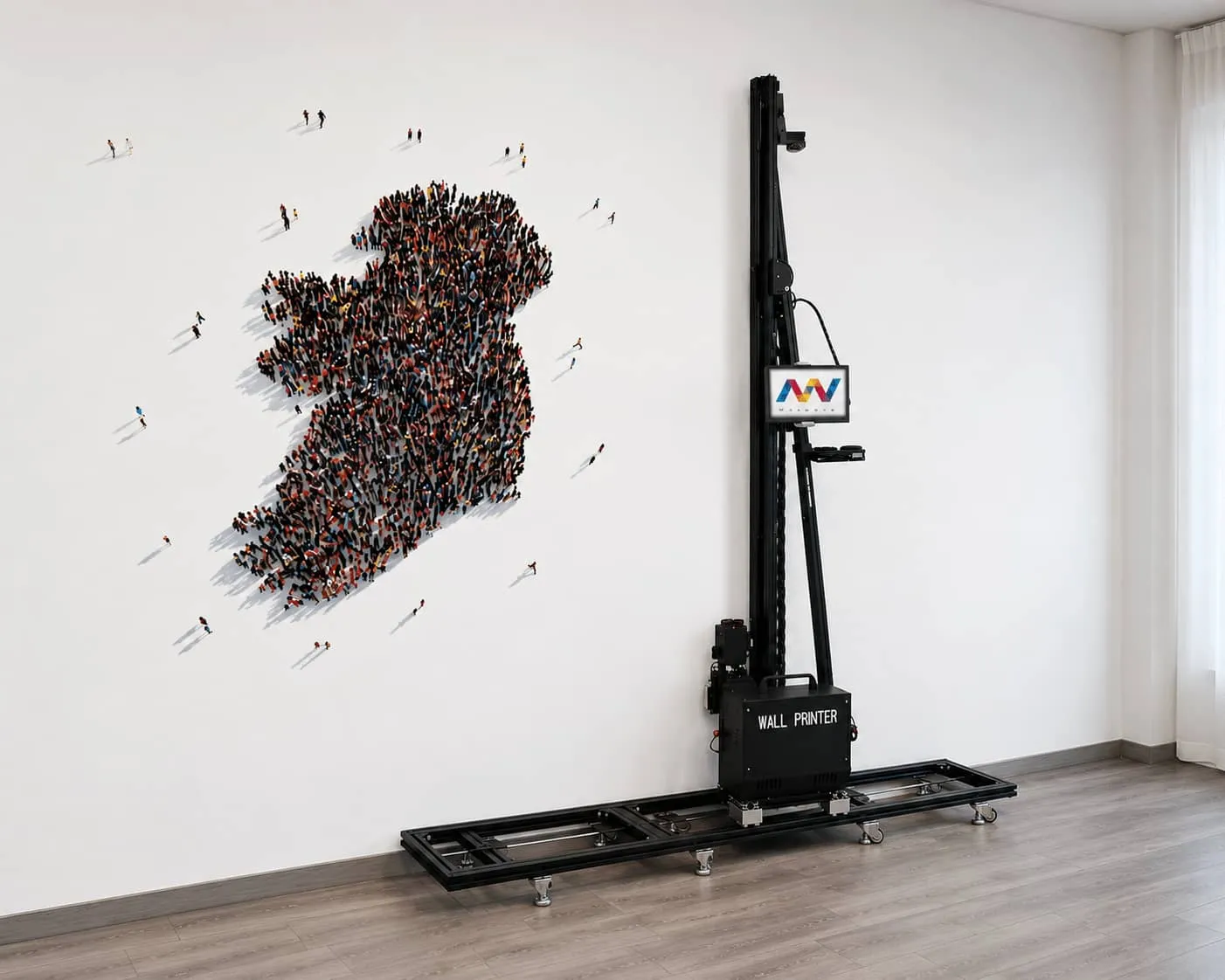
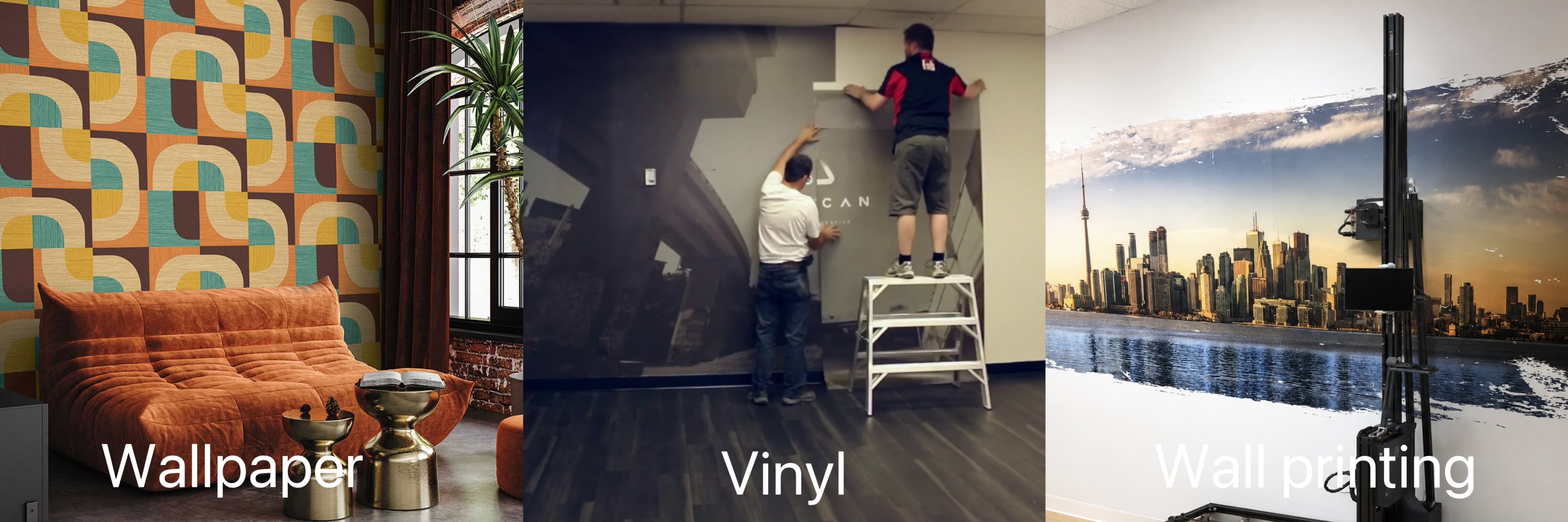
Wall printers and wall decals can both turn a blank wall into a custom mural, logo, photograph, or branded interior—but they behave very differently after installation.
The biggest differences are not simply print quality or price.
They are:
How long the finished graphic needs to stay on the wall, whether visible seams are acceptable, and what needs to happen when the design is eventually removed or replaced.
For most long-term commercial interiors, wall printing has a strong advantage because the image is printed directly onto the surface with no vinyl edges or panel seams.
For rentals, temporary promotions, exhibitions, or interiors that change frequently, removable wall decals are often the more practical choice because they can be replaced without repainting the entire design.
The quick answer is:
Factor | Wall Printer | Wall Decals |
|---|---|---|
Durability | Better for long-term installations when the wall and ink system are suitable | Depends heavily on vinyl, adhesive, laminate and environment |
Seamless finish | Excellent — image prints directly across the wall | Large murals normally require multiple vinyl panels |
Removal | Usually requires painting over, sanding or another surface-restoration method | Usually easier, especially with removable adhesive |
Textured surfaces | Can work well when the printer can track the surface | Requires the correct specialty vinyl and good adhesion |
Temporary graphics | Usually unnecessary | Excellent |
Long-term branding | Excellent | Good with premium permanent vinyl |
Risk of peeling edges | No vinyl edges to peel | Possible if adhesive, wall prep or environment is unsuitable |
Best for | Permanent murals, hotels, restaurants, offices, retail interiors | Rentals, promotions, exhibitions, frequently changing graphics |
So neither technology wins every project.
The better option depends on the expected life of the design and what the customer wants the wall to look like five years—or five months—from now.
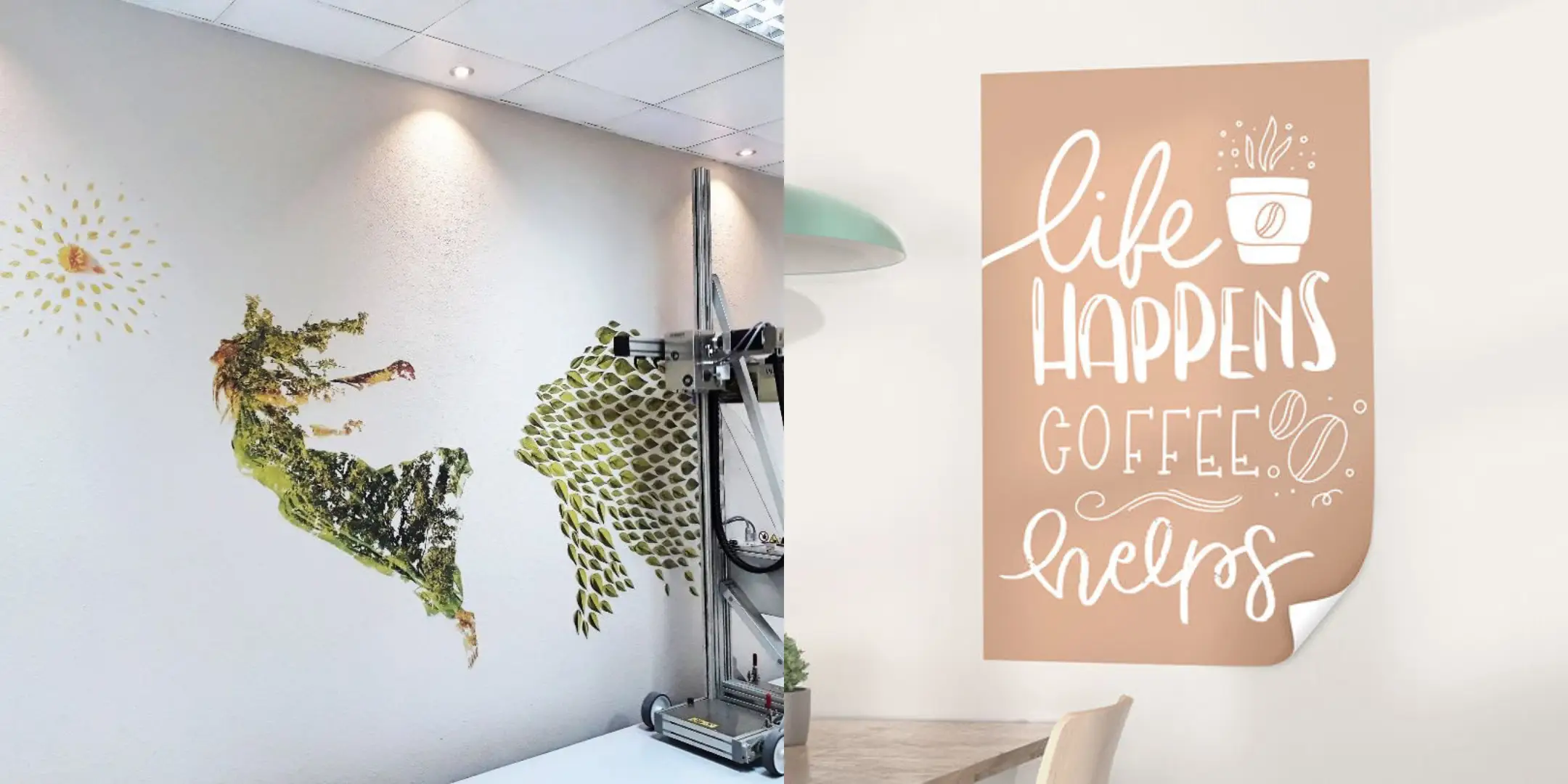
1. Which Is More Durable: Wall Printing or Wall Decals?
Durability depends on the entire system, not simply whether the image is printed or applied as vinyl.
For direct wall printing, durability is influenced by the ink, UV curing, wall preparation, substrate, indoor or outdoor exposure, moisture and physical contact.
For decals, durability depends on the vinyl grade, adhesive, lamination, installation quality and compatibility with the painted wall.
How Direct Wall Printing Holds Up
A modern wall printer for seamless commercial murals typically uses UV-curable ink.
The printer deposits the ink directly onto the wall, and integrated UV LEDs cure it immediately. This creates a dry printed layer without introducing a separate adhesive-backed film.
Premium wall-printing systems market this technology specifically around water resistance, scratch resistance and long-term indoor use. For example, wallPen states that its UV ink can maintain indoor color stability for up to 12 years depending on the surface, location and mechanical stress; its outdoor guidance is shorter and depends heavily on weather and protective coating.
Those figures should not be treated as universal guarantees for every wall printer.
The important principle is that a properly prepared indoor wall can support a long-term UV mural without the edge-lifting problem associated with adhesive film.
This makes direct printing particularly attractive for:
Hotels, restaurants, cafés, office reception areas, retail stores, schools, branded interiors and residential feature walls intended to remain unchanged for several years.
How Wall Decals Hold Up
Wall decals can also be highly durable when the correct media is used.
Professional wall films are very different from cheap decorative stickers.
Avery Dennison, for example, offers wall-film ranges specifically designed for interior graphics, with removable and permanent adhesive options. Its MPI 2600 range is described as tough, flexible and scuff-resistant, while different adhesive systems are intended for either temporary or longer-term wall decoration.
The problem is that decals introduce another failure point:
The adhesive.
Poor wall preparation, incompatible paint, humidity, dust, textured surfaces or incorrect installation can result in edge lift, bubbles or premature failure.
Direct printing does not have those adhesive-backed edges.
That gives a direct-to-wall UV printing system an inherent advantage when the customer wants a permanent graphic without worrying about panel edges lifting over time.
What About Textured Walls?
Neither technology should be assumed to work perfectly on every textured surface.
Specialty vinyl products exist specifically for textured walls. Avery, for example, offers films designed for surfaces such as brick and cinderblock.
Wall printers also vary significantly in their surface-tracking capability. Some advanced machines can compensate for uneven walls automatically, but there is still a limit to how deep or irregular the surface can be. wallPen, for example, says its system uses sensors to follow wall irregularities in real time and supports a range of surfaces including plaster, wood, brick, stone, metal, glass and tile.
For either method, the correct approach is:
Test the actual wall before quoting the full project.
Surface condition matters more than the marketing claim that a product can “print on anything.”
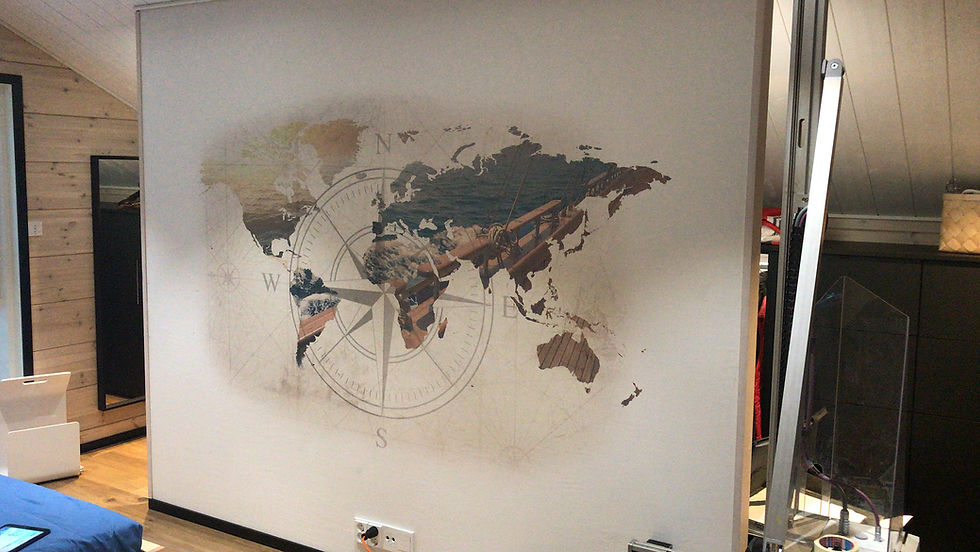
2. Which Gives a More Seamless Finish?
This is where wall printing has the clearest advantage.
A direct wall printer creates the image on the wall itself.
There are no rolls of media and no separate panels that need to be aligned next to one another.
The machine moves horizontally across the mural area while the printhead moves vertically, allowing the artwork to continue across a large wall.
Some professional systems support virtually unlimited horizontal mural width by repositioning or continuing machine movement; wallPen, for example, markets unlimited mural width and up to approximately 4 meters of vertical reach depending on configuration.
That is what makes a wall printing solution for long-term interiors especially attractive for:
Large branded walls.
Hotel lobbies.
Restaurant interiors.
Corporate reception areas.
Retail feature walls.
Panoramic murals.
Photo-realistic graphics.
The image reads as one continuous design.
Why Wall Decals Develop Seams
Printable wall vinyl comes in rolls with a fixed width.
Avery's current wall-film portfolio, for example, includes common roll widths around 54 and 60 inches for several wall-film products.
Once the mural becomes wider than the printable media, it has to be divided into panels.
A skilled installer can make those joins subtle, but they still exist.
Visibility depends on:
The vinyl finish.
Lighting angle.
Wall color.
Panel alignment.
Overlap method.
Installation quality.
Surface texture.
Gloss media can make joins more obvious when light hits the wall at an angle, while matte films generally hide them better.
For a temporary exhibition wall, this may not matter at all.
For a luxury hotel lobby with a 6-meter panoramic image under architectural lighting, it can matter significantly.
Wall Printing Also Avoids Edge-Lift Problems
A vinyl mural creates panel edges.
Those edges can become vulnerable points over time, especially near corners, high-touch areas or walls exposed to changing temperature and humidity.
Direct wall printing has no physical vinyl edge.
The image ends where the printed ink ends.
This does not mean direct printing is maintenance-free, but it eliminates one of the most common visual problems associated with large adhesive graphics.
If the client's main requirement is:
“I do not want to see where the mural panels join,”
then direct-to-wall printing is normally the stronger solution.
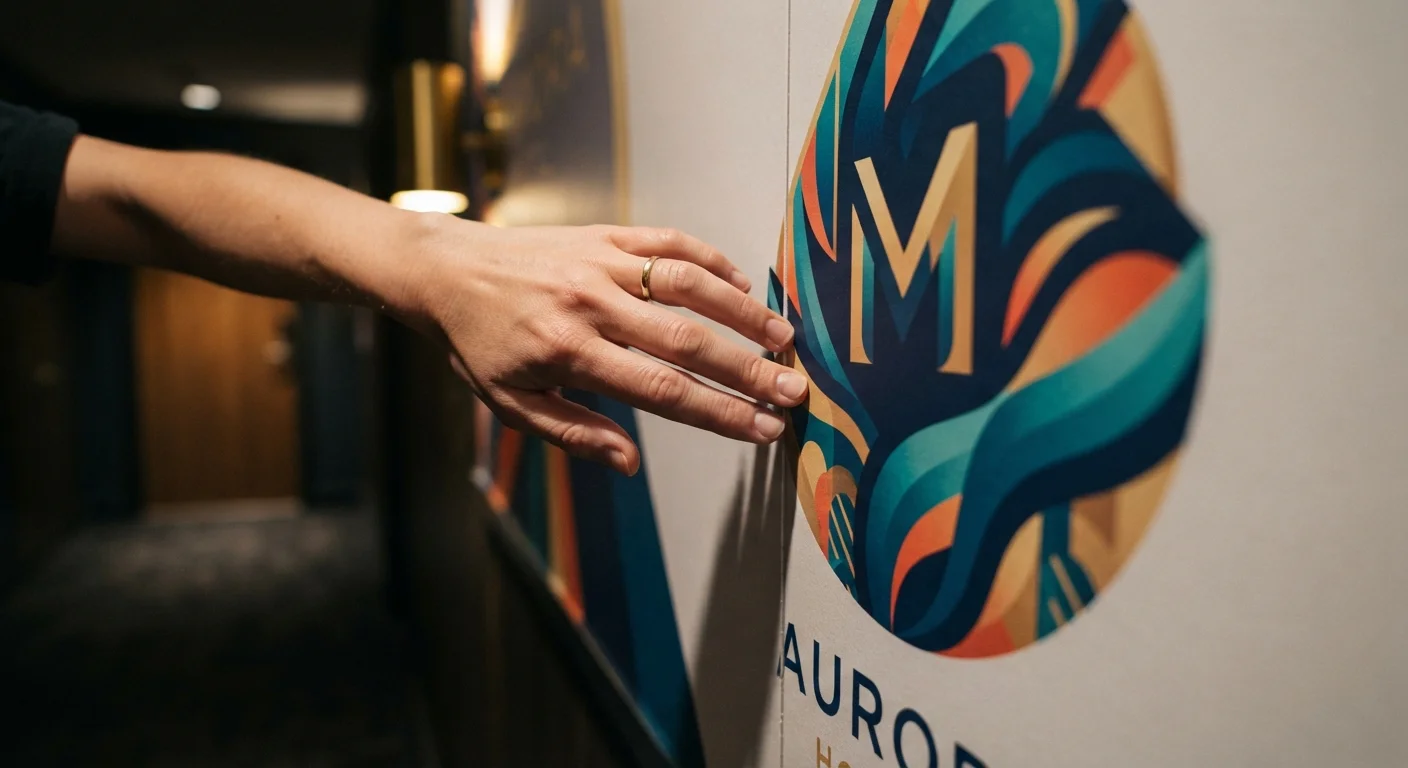
3. Which Is Easier to Remove or Replace?
Removal is the category where wall decals usually win.
That is exactly why they remain so useful.
A temporary retail campaign does not need a mural designed to last a decade.
A rental apartment does not need a permanent printed wall.
A child's bedroom theme may change after two years.
For those applications, easy replacement can be more important than maximum durability.
Removable Wall Decals
Professional removable films are specifically designed for shorter-term graphics.
For example, Avery's MPI 2631 wall film uses removable adhesive and is designed for clean removal with heat for up to one year from suitable smooth painted surfaces.
However, “removable” should not be interpreted as:
Guaranteed zero wall damage.
Avery's own installation guidance warns that clean removal from painted wallboard is not always possible. If the bond between the film and the paint is stronger than the bond between the paint and the wall itself, paint—or even part of the wallboard surface—can come away with the graphic.
Wall condition therefore matters enormously.
Fresh paint.
Low-quality paint.
Moisture damage.
Poorly prepared drywall.
Incompatible coatings.
All can affect removal.
Still, when the correct removable film is applied to a sound compatible wall, decals generally offer a much easier route to changing the design.
Removing a Direct Wall Print
A direct UV mural is not designed to peel away as one sheet.
On painted walls, the simplest route is often to prepare the surface and paint over the design.
On other materials, removal depends on the substrate.
For example, wallPen recommends painting over prints on ordinary walls, sanding on wood and using appropriate blasting or mechanical methods for materials such as metal or concrete.
This means a permanent commercial wall printing machine should be used with the client's long-term plans in mind.
If a restaurant expects to keep the same interior concept for seven years, this is not a major disadvantage.
If a retail store changes campaigns every three months, it probably is.
Removal Should Be Discussed Before Installation
A good wall-decoration proposal should ask:
How long will this design stay?
That one question can completely change the recommendation.
For a lease ending in 12 months, removable vinyl may be the obvious choice.
For a company headquarters with a permanent brand-history mural, direct wall printing is often the more logical investment.
Do not wait until the client asks how to remove the mural five years later.
Include expected design life in the original project discussion.

4. Which Should You Choose for Different Projects?
The best method becomes much easier to identify once durability, seams and removal are considered together.
Application | Better Starting Point | Why |
|---|---|---|
Hotel or restaurant feature wall | Wall printer | Long-term use and seamless appearance |
Corporate reception / brand wall | Wall printer | Clean continuous image with no panel joins |
Luxury residential mural | Wall printer | Premium seamless finish |
Large panoramic artwork | Wall printer | Avoids multiple vinyl seams |
Rental apartment | Removable decal | Easier to change at move-out |
Seasonal retail promotion | Decal | Frequent replacement is expected |
Exhibition / trade show | Decal | Temporary use |
Kids' room with changing themes | Usually decal | Easy redesign |
Permanent school mural | Wall printer | Long-term installation |
Short-term event graphics | Decal | Removal matters more than lifespan |
Choose a Wall Printer When the Design Is Part of the Space
Direct wall printing works best when the mural is intended to behave more like a permanent decorative finish than temporary advertising media.
The customer values:
Seamless appearance.
Custom dimensions.
Long-term installation.
No panel edges.
Direct printing on architectural surfaces.
Large-format artwork.
This is where a professional wall printer for large custom murals makes the strongest case.
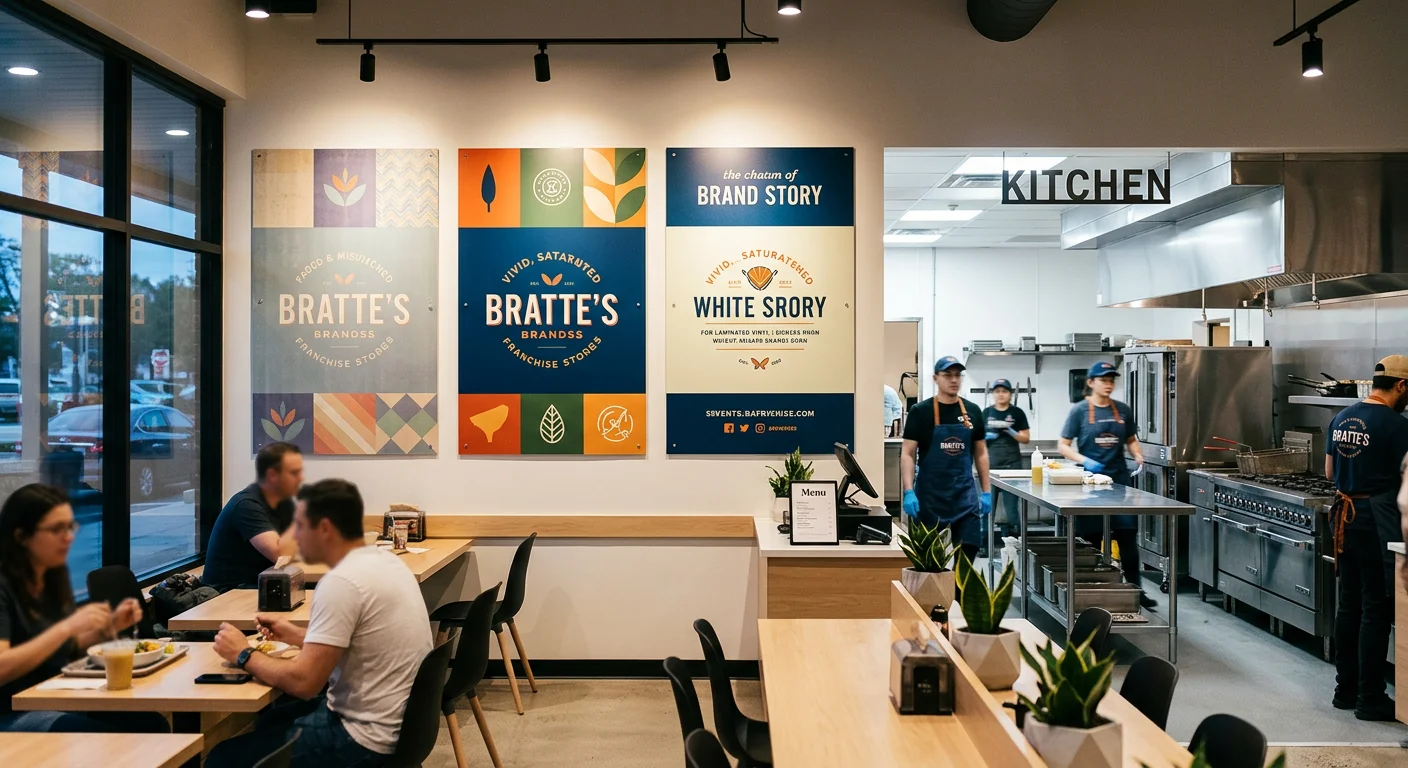
It is particularly attractive for businesses where the wall itself is part of the customer experience.
Restaurants want Instagram-friendly interiors.
Hotels want distinctive lobbies.
Retailers want branded environments.
Offices want company-story walls.
A visible vinyl seam can work against that premium effect.
Choose Wall Decals When Change Is Part of the Plan
Decals make more sense when flexibility is more important than permanence.
Examples include:
Temporary promotions.
Changing brand campaigns.
Short-term leases.
Rental properties.
Event spaces.
Exhibitions.
Seasonal decoration.
Frequently redesigned rooms.
The easier replacement process becomes an advantage rather than a compromise.
Cost Should Be Viewed Over the Design Life
The cheapest initial quote is not necessarily the cheapest solution.
Suppose a retailer changes its wall graphics four times over three years.
A permanent UV wall mural would require repeated repainting or surface preparation.
Removable decals may clearly be more economical.
Now imagine a restaurant installs one 20 m² mural and keeps it for seven years.
Repeated decal replacement, edge repairs or panel problems may make the permanent direct-printing approach more attractive.
The correct comparison is:
Total cost over the intended design life
rather than:
Price of the first installation.
This is also how a wall-printing business should explain the difference to customers.
Do not sell direct wall printing as “better vinyl.”
Sell it as a different solution for a different lifecycle.
Conclusion
Wall printers and wall decals are both effective ways to create custom graphics, but they are optimized for different priorities.
Direct wall printing is the stronger choice when durability, large-format continuity and a truly seamless finish matter most. The image is printed directly onto the surface, eliminating panel joins and adhesive-backed edges.
Wall decals are the stronger choice when easy removal, short-term use and frequent design changes matter most. Modern removable wall films can provide excellent graphics while making future replacement much easier—although clean removal still depends on the condition of the underlying wall.
For a hotel lobby, permanent restaurant mural, office brand wall or large commercial feature wall, direct printing usually makes more sense.
For rentals, exhibitions, seasonal promotions and rooms that will be redesigned frequently, decals are often the smarter option.
The simplest decision rule is:
Long-term + seamless → wall printer.
Short-term + removable → wall decals.
Neither technology needs to replace the other.
Professional decorators and printing businesses can use both, choosing the method according to the expected life of each project.
If your customers are increasingly requesting permanent murals without visible joins, a wall printer for professional mural businesses can expand the type of commercial projects you are able to offer.
Send WallPrintGear your typical wall materials, mural sizes, target customer types and expected monthly workload. The team can help you evaluate a suitable wall-printer configuration and arrange a sample print so you can compare the finish directly with the vinyl-wall solutions you already use.