Search "wall printer reviews" and you get five different "best of" lists, five different rankings, and zero explanation of why any of them made the cut. You're trying to avoid dropping thousands of dollars on a UV wall printer that looks great in a demo video and falls apart three months into actual business use.
We dug into warranty terms, actual response times from customer support, and real feedback from buyers who've run these machines in production. You'll get a straightforward look at five affordable wall printer options, what "trustworthy" looks like on paper, and who each machine is wrong for. The checkpoints you need before you commit your budget.
Affordable Wall Printer Comparison: Price, Speed and Best Use
Wall Printer | Approx. Price | Typical Speed | Key Advantage | Best For | Main Limitation |
|---|---|---|---|---|---|
DXonJet VPJet4.0 | $9,000–$26,000 | 1–5 m²/h | 2.5D texture printing and uneven-wall compensation | Detailed murals and custom printing | Prices and specifications vary between resellers (WallPen) |
WallPrintGear | $9,800–$22,000 | 3–5 m²/h | Portable design, flexible configuration and factory support | Startups and mobile wall-printing businesses | Not designed for continuous industrial production (WallPrintGear) |
Friankor MK01 / MK02 | $8,000–$17,000 | 2–6 m²/h | Portable system with an integrated computer | Contractors working across multiple job sites | Limited output for high-volume production (Friankor) |
Maxwave MW-UP200P | From $4,380 | 5–8 m²/h | Low entry price, 4 m printing height and 2880 DPI | Budget-conscious startups | Heavy-use durability and warranty terms should be confirmed |
Tanyu TPP / TMP / TWF Series | $4,000–$12,000 | 2–16 m²/h | Multiple configurations, including wall-and-floor printing | Buyers needing configuration flexibilit | Limited independent customer reviews (Tanyu Wall Printers) |
These five wall printers serve different priorities rather than offering one universal “best” option. Maxwave has the lowest entry price, WallPrintGear and Friankor focus on portability, DXonJet emphasizes detailed output, while Tanyu offers more configuration choices. Before purchasing, confirm the exact printhead, included accessories, warranty, training, shipping costs and after-sales support, as these factors can significantly affect the final value.
DXonJet Wall Printers (VPJet4.0 & Mid-Range UV Models)
DXonJet's VPJet4.0 sits in an odd spot: it's a genuine industrial-grade machine sold through so many different resellers that the specs shift depending on where you look. That inconsistency is your first trust test.
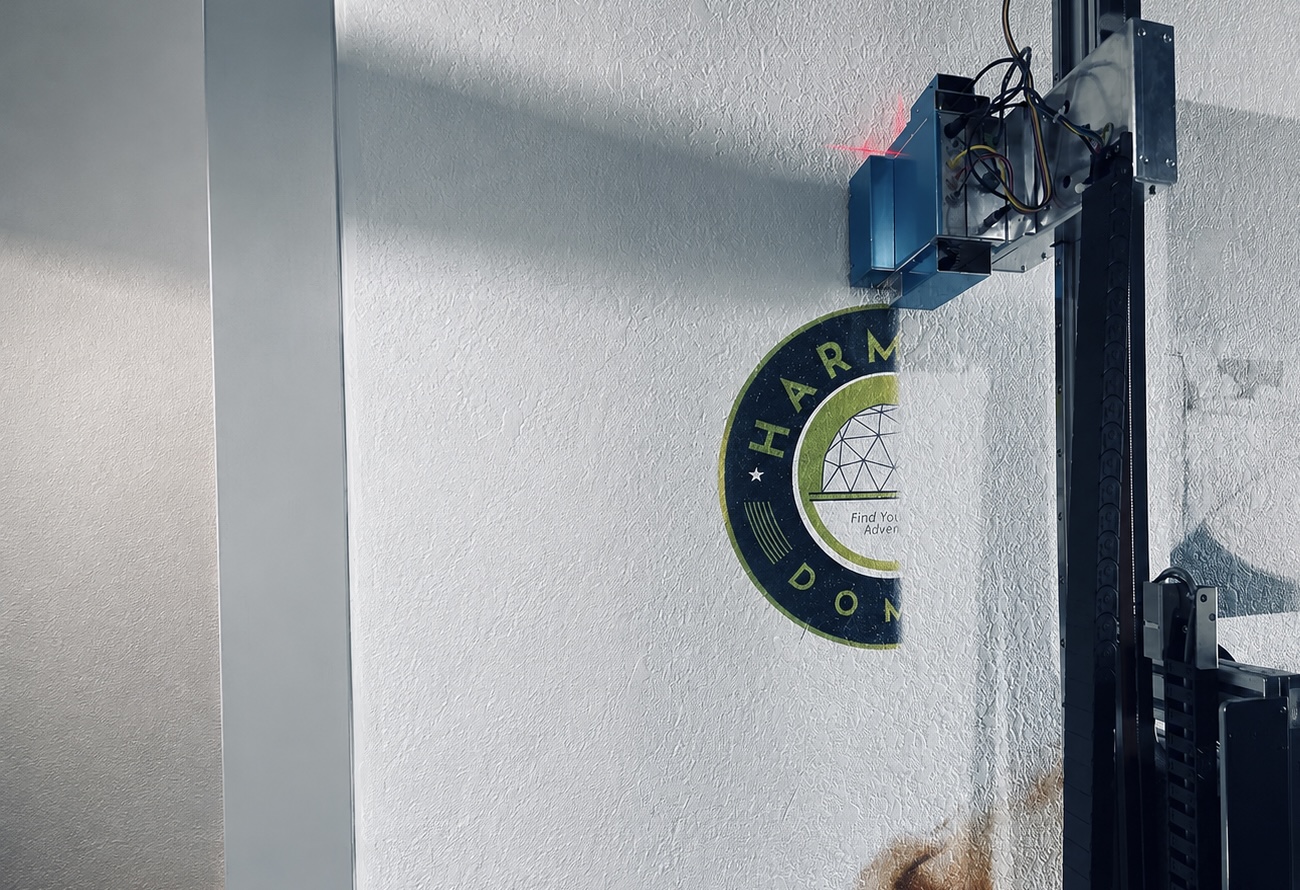
The hardware is legit. This is a vertical wall printing machine built on Epson piezo DOD printheads (F1080, i3200 U1-HD, or DX7 depending on kit), running LED-UV curable ink at 395nm across CMYK+White. Print area tops out around 2500mm × 6000mm, with the maker's own technical guide listing realistic speeds of 1–2 m²/h at 6- to 16-pass quality settings. The premium kit pushes to 5 m²/h with a helical rack-and-pinion vertical drive and 2.5D texture printing — raised ink effects most budget wall mural printers can't touch.
Verify trust by cross-checking listings, not just specs. Afrimart quotes 1440 dpi and "up to 3 m²/h." Alibaba variants claim 2400×600 dpi or even 4800 dpi. DXonJet's own technical documentation says 1440/720 dpi. When resolution claims swing that wildly across sellers, treat the manufacturer's technical guide as ground truth — not the flashiest listing.
Weight and dimensions tell the same story. Afrimart lists 80kg; an Alibaba European listing for a similar mid-range UV variant lists 250kg. That's not a small rounding error — it likely reflects different crate/accessory configurations. Before buying, get the exact bill of materials in writing, not a generic spec sheet.
Who This Machine Actually Works For
Good fit: Small businesses doing mural work, wallpaper printing, or signage on plaster, brick, leather, or fabric who need CMYKWW output on dark substrates. The ultrasonic wall-distance compensation (handles up to ~6mm unevenness) makes it usable on real job-site walls, not just flat test panels.
Bad fit: Anyone needing high-volume production speed. Even premium configs cap around 2.5 m²/h at usable quality — this is a boutique mural and custom-decal printer, not a large format wall printer for volume runs.
One buyer running a small decor studio reported buying the starter kit in early 2023 and needing about three weeks of daily use before nailing consistent color output — a real onboarding cost worth budgeting for, not something the sales page mentions.

WallpPrintGear
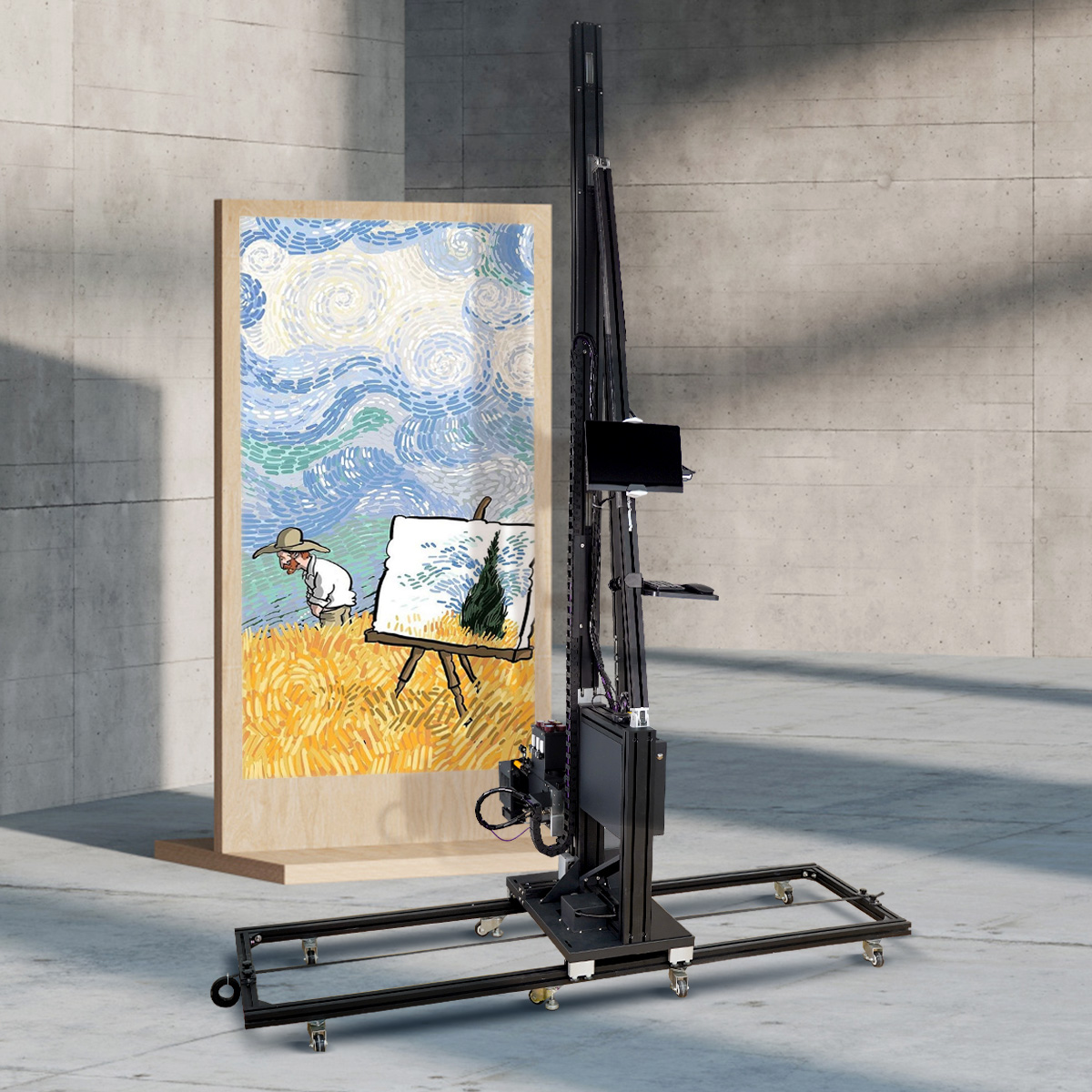
A portable wall printer that fits into a van and can be operated by one person is designed for real on-site work, not factory-floor production. WallPrintGear focuses on compact vertical printing systems for murals, commercial branding and interior decoration projects.
The machine uses a rail-guided structure and UV-curable ink, allowing operators to print directly on prepared walls without installing wallpaper or vinyl. Its printing height reaches approximately 3 meters, with optional extension to around 4 meters, while horizontal printing length can be expanded by repositioning the rails.
Typical printing speed is around 3–5 m²/h, depending on image detail, resolution and wall condition. A 12 m² feature wall may therefore require roughly 2.5 to 4 hours of printing, excluding setup and surface preparation. This gives contractors a practical number for estimating labor time and project pricing.
WallPrintGear positions its systems as factory-direct packages for small businesses and existing decoration companies. Machine configuration, software, training, remote technical support and accessories can be included according to the buyer’s requirements.
Who This Machine Actually Works For
Good fit: Small wall-printing businesses, sign shops, advertising companies, interior decorators and renovation contractors completing murals in homes, restaurants, offices, hotels and retail spaces. Its portable structure is especially useful for businesses moving between different job sites.
Bad fit: Large factories requiring fully automated, high-volume production or continuous operation for more than ten hours per day. It is also less suitable for badly damaged or extremely uneven walls unless the surface is tested and prepared first.
The main advantage of WallPrintGear is not simply a lower machine price. It is the combination of portability, flexible configuration, direct-to-wall printing and factory support, giving small businesses a more accessible way to enter the commercial wall-printing market.
Friankor MK01 / MK02 (Portable Industrial Wall Printers)
A 65kg machine that fits in the back of an SUV is either a genuine engineering win or a marketing gimmick. With the Friankor MK01, it's the former — and the spec sheet backs it up.
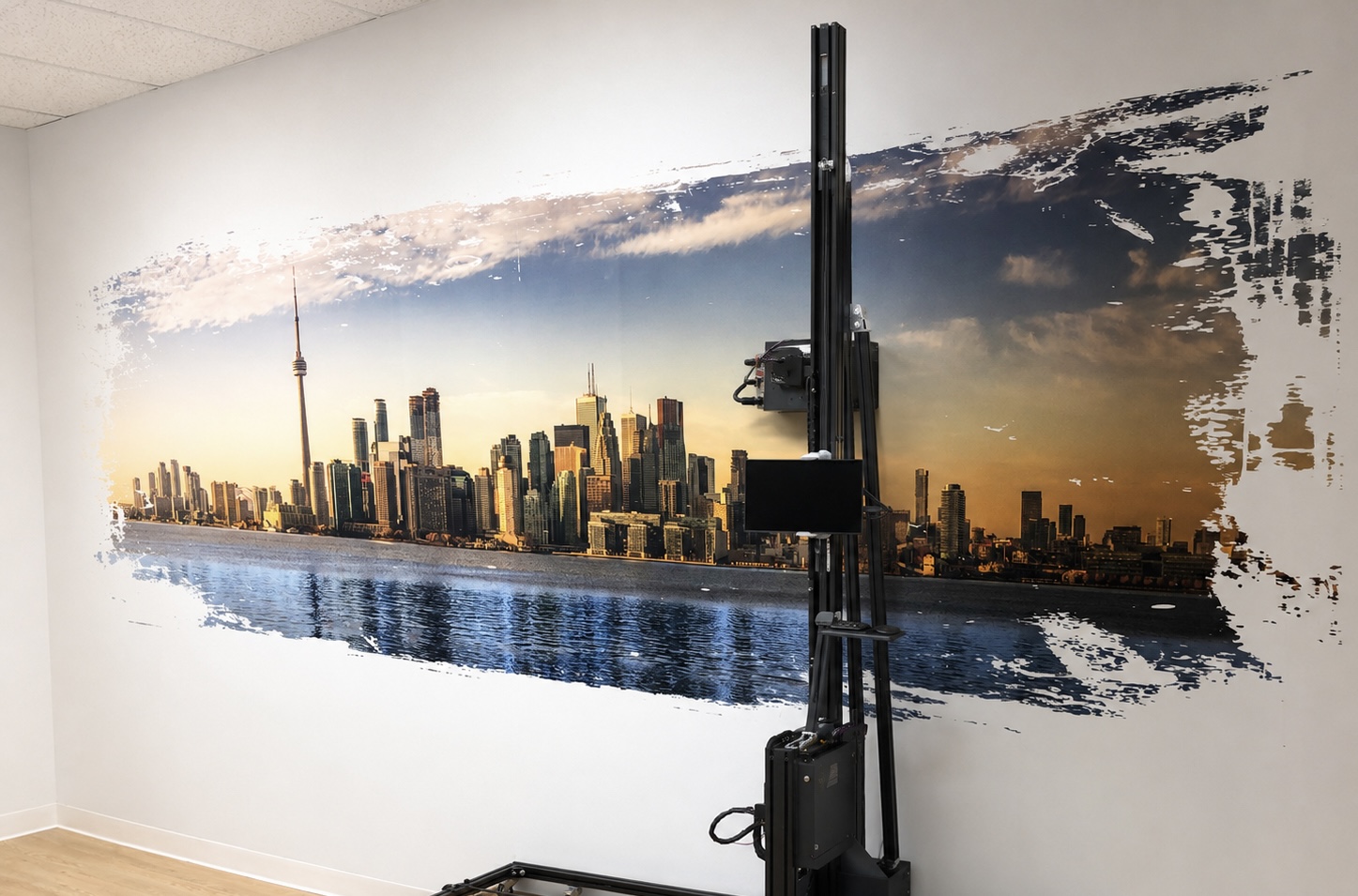
Both the MK01 and MK02 are portable UV wall printers for on-site mural work, not warehouse installations. They use Epson DX7 or I1600 printheads (MK02 ships with I1600 as the default, no substitutions), run UV-curable CMYK+White ink through up to 24 channels, and print at 2–6 m²/h. That speed range matters. A 3m × 4m mural (12 m²) takes roughly 2 to 6 hours depending on resolution, which is a number you can plug into a client quote instead of guessing.
Friankor's specifications stay consistent across its own documentation: 2.5m portable printing height, unlimited horizontal width via 6m rails, resolution up to 2880 DPI, and a 2-year warranty on most marketplace offers. The MK01 packs down to 1540×740×570mm at 170kg; the MK02 runs slightly heavier at 190kg in a 1360×750×710mm case. Both include a built-in 11.6" screen with 8GB RAM and 128GB storage. You do not need a separate laptop on the job site.
Who This Machine Actually Works For
Good fit: Small businesses doing on-location wall decal or mural jobs: retail buildouts, restaurant branding, or residential accent walls. The –10°C to 60°C operating range and standard 110–240V power draw let you run this in an unconditioned commercial space without special electrical work. Surfaces go from concrete and brick to glass, tile, and drywall.
Bad fit: Anyone chasing large format wall printer output at true industrial volume. This is a vertical printing device sized for mobility, not a fixed installation meant to run 10+ hours a day, five days a week.
One reseller feedback thread mentioned a small signage contractor who bought the MK01 in mid-2023 specifically for its SUV-portable footprint. He moved between three job sites in a single week without renting a van. That kind of operational flexibility does not show up on a spec sheet, but it is exactly the detail that separates a real trust signal from a sales pitch.

Maxwave Wall Printer (Entry-Level Vertical Printer under $6,500)
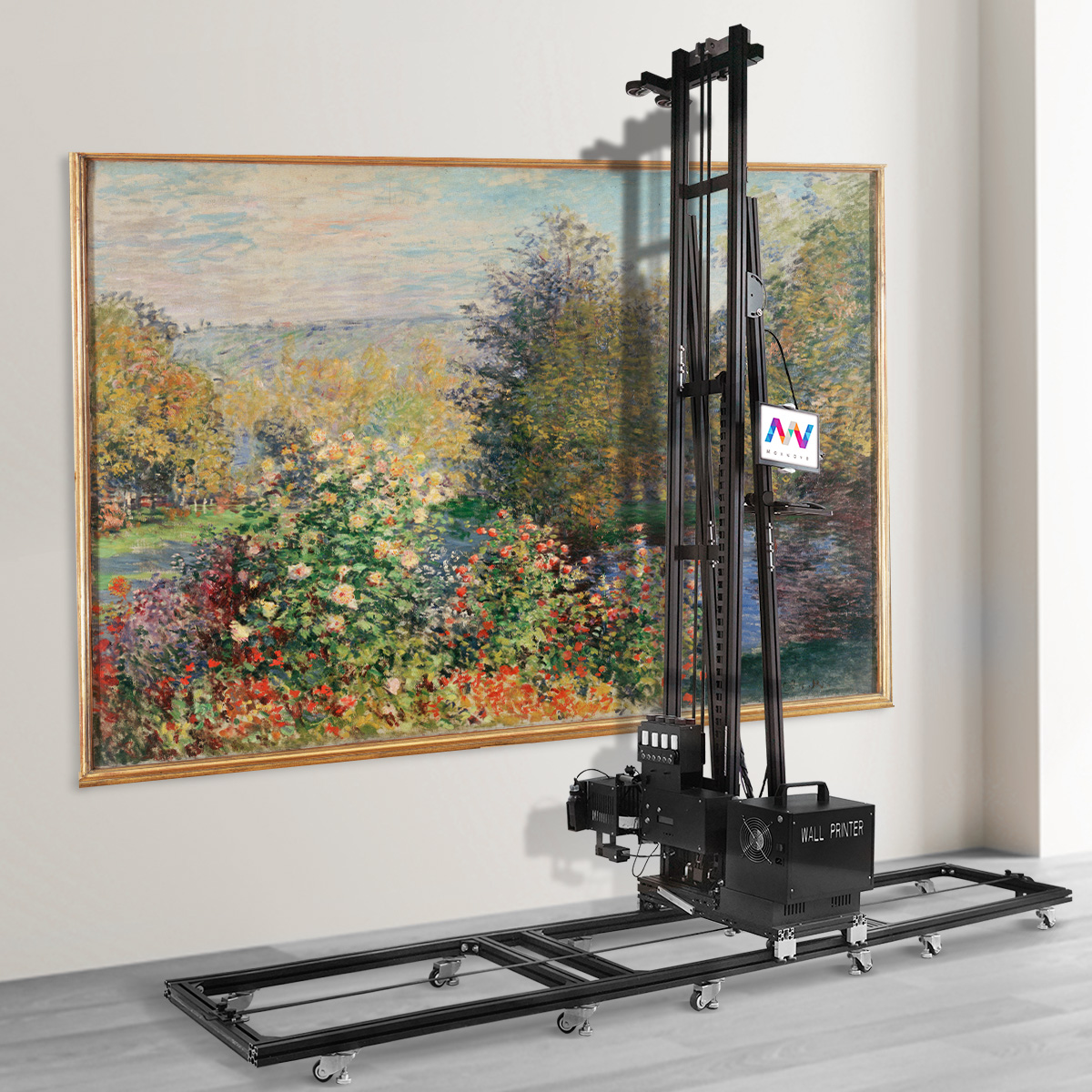
For $4,380, you get a real UV wall printer. That's the price on the MW-UP200P, Maxwave's entry model, and it sits under every other machine's floor price on this list. Cheap here means budget-smart or budget-trapped.
You get Epson dual heads at 3.0 PL droplet size, resolution up to 2880 dpi, and a modular aluminum tower that stacks 1m + 1m + 0.5m + 0.3m + 0.2m sections to reach a 4-meter max print height. Width is unlimited since the carriage rides rails along the wall. Speed runs 8 m²/hour in standard mode, dropping to 5 m²/hour when you push high-resolution output — numbers that line up with Friankor's range but at about one-third the entry cost.
Maxwave entry units run CMYK + LC + LM + White UV-curable ink, a 7-color system that handles dark substrates and glass, ceramic, wood, and metal signage without switching machines. Some listings offer water-based alternatives for low-odor indoor jobs. Power draw stays modest too: single-phase 220V at around 2000W, with portable variants supporting 110–220V for cross-border buyers.
Who This Machine Works For
Good fit: Startups and small studios testing the wall mural printer market without committing $15,000+. If you're printing indoor murals, decorative glass panels, or small-run ceramic tile work, the 2880 dpi output and CMYK+White ink cover you.
Bad fit: Anyone needing outdoor durability guarantees or high-volume daily runs. The lighter aluminum frame (45–120kg depending on config) prioritizes portability over industrial-grade endurance — verify warranty terms directly with the seller before assuming coverage matches pricier competitors.
Tanyu Wall Printers (Compact TPP1000 / TMP1000 / TWF1000 Series)
Three machines, one platform, three different jobs. Suzhou Tanyu Technology built the TPP1000, TMP1000, and TWF1000 on shared electronics and ink systems, then made them different by weight, portability, and whether they print floors too. You're comparing three configurations of the same engineering, not three unrelated products. That's a smarter trust signal than most brands give you.
The TPP1000 is marketed as "the cheapest wall printer for business." Bold claim. Check the numbers. You get Epson DX7 or I1600 printheads (DX10 optional), 1440 and 2880 dpi as the main resolution modes, and a 3-meter standard print height that extends to 4 meters with rail extensions. Speed runs 2–16 m²/h depending on quality settings. Ink capacity sits at 500ml per color across a CMYK+White five-color system.
The TMP1000 trades height for portability. At about 50kg, it's built for on-site jobs where you can't haul rail-based equipment. Print height drops to 2.5m — a real tradeoff — but it runs the same DX10 printhead and shares the platform's UV ink chemistry.
The TWF1000 switches between wall and floor printing in about 5 minutes. That's the standout feature. The other two can't do it. It uses a slider drive instead of the white-wheel mechanism on the TPP1000, weighs 75.36kg plus 24.8kg of rails, and adds automatic white ink stirring with low-ink alerts. Small reliability details that matter when you're mid-job and can't afford a clog.
Who This Series Works For
Good fit: Small business owners comparing entry-level 3D wall printing machine options who want documented specs across three configurations instead of one black-box product. If you need wall-only work, the TPP1000 is your budget play. Need to move between sites, the TMP1000. Need both wall and floor coverage, the TWF1000.
Bad fit: Buyers wanting a single verified real-world case study. Tanyu's documentation is thorough on specs but thin on independent third-party wall printer reviews. Cross-check reseller listings before trusting any single source's pricing.
Conclusion
An affordable wall printer machine is only a good investment when its specifications, support and operating costs match your actual business needs. DXonJet stands out for detailed printing, WallPrintGear and Friankor prioritize portability, Maxwave offers a lower entry point, and Tanyu provides flexible configurations for different applications.
Before placing an order, confirm the exact printhead, warranty coverage, included accessories, training, spare-parts availability and total delivered cost. Ask for a live printing demonstration and speak with an existing customer whenever possible.